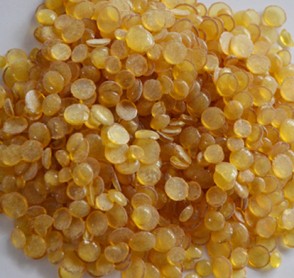
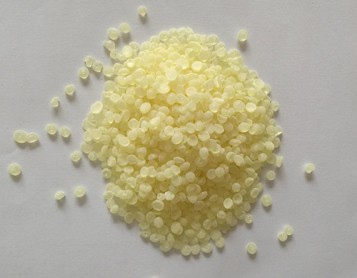
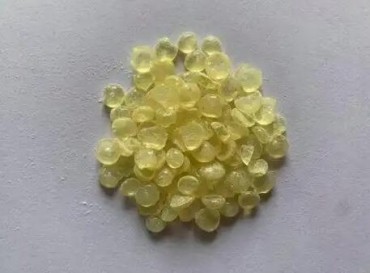
Thermal polymerization petroleum resin, as an important intermediate in the petrochemical industry, is a special material that converts unsaturated hydrocarbons in fractions such as C5 and C9 into solid resin through thermal polymerization process. Its unique molecular structure and thermal polymerization properties make it irreplaceable in industries such as adhesives, coatings, and rubber. This article will systematically analyze the technical connotation and development direction of thermal polymerization petroleum resin from four dimensions: polymerization mechanism, production process, performance characteristics, and application fields.
1. Definition and Aggregation Mechanism
Thermal polymerization petroleum resin is a low molecular weight polymer produced by free radical polymerization of dienes, monoolefins, and aromatic hydrocarbons from petroleum cracking by-products at high temperatures of 180-250 ℃. Its molecular structure is mainly composed of C5-C9 hydrocarbons, including monomer units such as 1,3-pentadiene, isoprene, styrene, etc. The molecular weight distribution is concentrated in the range of 300-3000 g/mol.
The polymerization reaction follows the free radical chain reaction mechanism, and the specific process can be divided into three stages:
(1) Chain initiation stage: Under high temperature conditions, the diene in the raw material undergoes homolysis to generate free radicals, such as the decomposition of 1,3-pentadiene into two allyl radicals. This stage requires precise control of temperature gradient to avoid excessive cracking and loss of raw materials.
(2) Chain growth stage: Free radicals undergo addition reactions with monomers to form long-chain polymers. Experiments have shown that at 220 ℃, the polymerization rate constant of isoprene can reach 0.8 L/(mol · s), which is 1.5 times that of styrene. At this stage, the mixing efficiency of the reactants needs to be adjusted by stirring intensity to ensure uniform molecular weight distribution.
(3) Chain termination stage: Free radicals terminate through coupling or disproportionation reactions, forming stable polymers. The termination method directly affects the softening point of thermal polymerization petroleum resin, and the softening point of the resin generated by coupling termination is 15-20 ℃ higher than that of disproportionation termination.
Compared with cold polymerization process, thermal polymerization reaction does not require the addition of initiators and directly activates monomer polymerization through thermal energy, which has the advantages of short process flow and low production cost. However, high temperature conditions can easily lead to an increase in branching degree, and the crosslinking density of the resin needs to be controlled by adjusting the raw material ratio.
2. Production process system
The production of thermal polymerization petroleum resin adopts continuous thermal polymerization process, and the core equipment includes preheater, polymerization kettle, distillation tower, and granulator. The specific process flow is as follows:
(1) Raw material pretreatment: Distill and separate the C5 and C9 fractions to remove impurities such as sulfur and nitrogen, ensuring that the purity of the raw materials is ≥ 98%. Through gas chromatography analysis, precise control of the diene content within the range of 40-60% is a key parameter to ensure the activity of the polymerization reaction.
(2) Thermal polymerization reaction: After the raw materials are heated to the reaction temperature in the preheater, they enter the polymerization kettle with a stirring device. Control the degree of polymerization by adjusting the temperature gradient (200-230 ℃) and residence time (2-4 hours) inside the kettle. Experimental data shows that when the reaction temperature is increased by 10 ℃, the polymerization rate increases by 30%, but excessive heating can cause the resin color to deepen.
(3) Deactivation treatment: After cooling the polymerization product, add a polymerization inhibitor to terminate the reaction. The commonly used addition amount of hydroquinone based polymerization inhibitors is 0.05-0.1wt%, which can effectively prevent post polymerization during storage.
(4) Distillation refining: Separate unreacted monomers and oligomers through vacuum distillation, and control the resin softening point within the range of 80-130 ℃. The operating pressure of the distillation tower should be precisely controlled within 1-5kPa to avoid thermal decomposition of the thermal polymerization petroleum resin.
(5) Granulation packaging: The refined resin is melted and extruded into granules with a particle diameter controlled between 3-5mm. A nitrogen protection system is used to prevent resin oxidation and discoloration, ensuring that the product color (Gardner index) is ≤ 3.
Modern production lines have achieved intelligent control, with real-time monitoring of the reaction process through online viscometers and softening point testers, resulting in a product qualification rate of over 98%. At the same time, a new catalytic thermal polymerization process has been developed, which can lower the reaction temperature to 160 ℃ and reduce energy consumption by 25% under the action of alumina supported catalyst.
3. Performance Characteristics Analysis
(1) Molecular structural characteristics: The molecular chain of thermal polymerization petroleum resin contains a large number of double bonds and branched structures, making it both polar and non-polar. Infrared spectroscopy analysis shows that its conjugated double bond content reaches 15-20mol%, which is the key to endowing the resin with excellent compatibility.
(2) Thermal performance: Differential Scanning Calorimetry (DSC) measurements show that the glass transition temperature (Tg) of thermal polymerization petroleum resin is in the range of 40-70 ℃, which complements the Tg range of commonly used rubber (EPDM is -50 ℃), and is an important basis for its use as a thickening agent.
(3) Compatibility advantage: It can form a homogeneous system with various polymers, with a solubility parameter of 8.5 (cal/cm ³) ¹/² in styrene butadiene styrene block copolymer (SBS), and a 40% increase in compatibility index with polypropylene.
(4) Adhesive performance: According to the tensile testing machine test, the pressure-sensitive adhesive with 15wt% thermal polymer resin added can achieve a 180 ° peel strength of 2.8N/mm, which is 65% higher than the untreated system. This is mainly attributed to the physical entanglement between the resin molecular chains and the substrate.
(5) Stability index: After aging for 168 hours at 85 ℃/85% RH, the resin color change Δ Gardner ≤ 1, mass loss rate<0.5%, exhibiting excellent heat and moisture resistance.
4. Expansion of application areas
(1) Adhesive industry: As a key component of pressure-sensitive adhesives and hot melt adhesives, it can adjust the initial and holding viscosity of colloids. In electronic component packaging, the shear strength of epoxy adhesive with added resin reaches 25MPa, meeting the reliability requirements of microelectronic devices.
(2) In the field of coatings: used as a leveling agent for automotive topcoats, it can reduce the surface tension of coatings to 28mN/m, improve the leveling and glossiness of coatings. Experiments have shown that adding 3wt% resin can increase the 60 ° glossiness of the coating by 15 units.
(3) Rubber industry: As a reinforcing agent for butyl rubber, it can increase the tensile stress of vulcanized rubber by 30%. Applied in tire tread rubber, the rolling resistance is reduced by 8%, which meets the A-level standard of the EU tire labeling method.
(4) Ink manufacturing: used as a bonding agent for UV ink, which can enhance the adhesion of ink to non-polar substrates. The contact angle measurement showed that the contact angle of the ink with added resin on the PE film decreased from 98 ° to 35 °, and the wettability was significantly improved.
Thermal polymerization petroleum resin, as an important achievement in the chemical industry, is refined by high-temperature polymerization process using cracked C9 and other fractions as raw materials. It has excellent thermal stability and compatibility, can maintain stable performance in high temperature environments, and blends well with various materials. Its water resistance and acid alkali resistance further expand its application range. In industries such as paint, rubber, ink, and printing, thermal polymerization petroleum resin plays an irreplaceable role as a key additive. Looking ahead to the future, with the continuous advancement of technology, thermal polymerization petroleum resin will usher in a broader development space, injecting new vitality into the chemical industry.

 Language


 Address:Linzi District,Zibo City,Shandong Province
 E-mail:wanbang@wanbangresin.com
 WhatsApp:+8615053337101