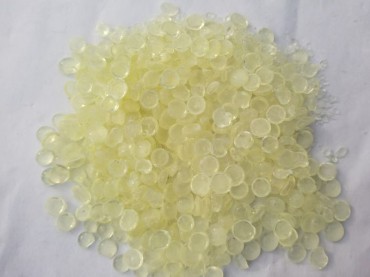
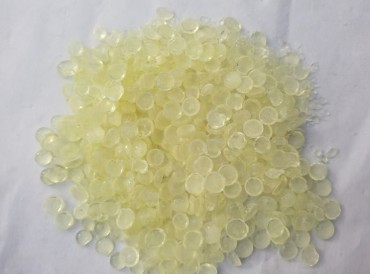
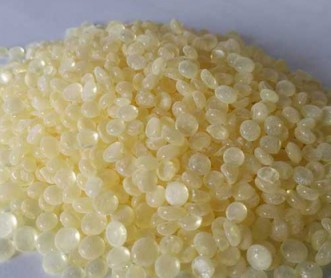
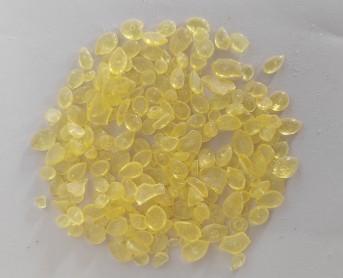
Rubber viscosity-enhancing and hardening resins play a crucial role in the production and application of rubber products. It is like a "reinforcing agent" and "adhesive" for rubber, which can significantly improve the performance of rubber products. Different types of rubber viscosity-enhancing and hardening resins have unique characteristics due to their different chemical structures and properties, and are suitable for different rubber products and application scenarios. Understanding the types and characteristics of these resins is crucial for rubber production enterprises and R&D personnel. It can help us choose resins reasonably, optimize rubber formulas, and produce rubber products with better quality and more stable performance. So, what are the types of rubber viscosity-enhancing and hardening resins? What are their respective characteristics? Let's explore together.
1. Types and characteristics of rubber thickening resins
1. Natural products and their derivatives
(1) Rosin and its modified products
Basic rosin: including resin rosin (secreted by pine trees), tall pine fragrance (a byproduct of papermaking), and wood pine fragrance (extracted from pine trees). Rosin contains abietic acid, which is unstable under light, heat, and oxygen conditions, prone to oxidation and discoloration, and has poor aging and weather resistance.
Modified rosin: To improve the performance of basic rosin, hydrogenated rosin, disproportionated rosin, polymerized rosin, esterified rosin, maleic acid rosin, etc. have been derived. Hydrogenated rosin significantly improves weather resistance; Esterified rosin reduces polarity and enhances compatibility, making it widely used in pressure-sensitive adhesives and rubber thickening.
(2) Terpene resin
It is polymerized from alpha terpenes of turpentine and can also be modified with phenol, styrene, etc. Terpene resin is transparent, non-toxic, neutral, electrically insulating, hydrophobic, non crystalline, resistant to dilute acids and alkalis, heat resistance, light resistance, anti-aging and other characteristics. It has strong adhesive force, good compatibility with various synthetic substances, easy to dissolve in aromatic hydrocarbons and vegetable oils, and good light resistance. It is suitable for light colored products, such as medical tape.
2. Synthetic resin
(1) Polymer resin
C5 petroleum resin, also known as C5 resin or aliphatic resin, is divided into three types: universal, blended, and transparent, with an average molecular weight of 1000-2500. It is usually a solid aliphatic hydrocarbon resin with good thickening, heat resistance, stability, water resistance, acid and alkali resistance, and the thickening effect is generally better than C9 resin. Good compatibility with phenolic resin, terpene resin, Gumaron resin, natural rubber, synthetic rubber, etc., especially with styrene butadiene rubber (SBR), commonly used in the manufacture of pressure-sensitive adhesives, hot melt adhesives, etc.
C9 petroleum resin: also known as aromatic petroleum resin, polymerized from C9 fraction, a byproduct of ethylene cracking, as the main raw material. Good acid and alkali resistance, chemical resistance, and water resistance, but poor bonding performance, high brittleness, and poor aging resistance, making it unsuitable for use alone. It has good compatibility with phenolic resin, Gumaron resin, terpene resin, SBR, SIS, but poor compatibility with non-polar polymers due to its high polarity. It is widely used in solvent based adhesives, hot melt adhesives, alkyd paints, high-end adhesives, rubber, ink and other fields.
C5/C9 copolymer resin: Combining the advantages of C5 and C9 resins, it can not only increase the adhesion between rubber particles, but also improve the adhesion between rubber particles and tire cords. It is suitable for high demand rubber products such as radial tires, and can also adjust the adhesion and bonding strength.
DCPD petroleum resin: a low molecular weight polymer polymerized by special processes such as dicyclopentadiene, with a light color code and high bromine value. It has good activity and solubility when used in high-end rubber. Good compatibility with ester and polyurethane solvents, good compatibility with epoxy resin in ester solvents, and good curing rate for epoxy resin. It can be used as a modifier, mainly for rubber mixing in high-end rubber products, radial tires, racing tires, diagonal tires, inner tubes, as well as related industries such as ship paint, polyester paint, adhesives, electrical engineering, printing ink, etc.
(2) Condensation resin
Alkyl phenolic resin: obtained by the condensation reaction of alkylphenols (commonly used include tert butyl, tert octyl, and nonylphenol) with aldehydes. It has excellent high temperature resistance and can maintain its performance even at temperatures exceeding 200 ℃. It is commonly used in racing tires.
Xylene resin: a polymer obtained by reacting xylene with formaldehyde under acidic conditions, among which meta xylene has the highest reaction activity. The structure is complex, composed of complex compounds with multiple structures, containing a large number of ether bonds and having high polarity.
2. Types and characteristics of rubber hardening resins
Taking Luck P-200 hardening resin as an example, it is a reinforcing agent for natural rubber and various synthetic rubbers such as styrene butadiene, nitrile, butyl, EPDM, and chloroprene rubber. It has a plasticizing effect before vulcanization, and after vulcanization, it can effectively increase the tensile strength, hardness, and modulus of rubber, improve its ability to resist aging, chemical corrosion, solvents, and gasoline, and also have excellent wear resistance. Specially suitable for high hardness sulfur sulfide products, theoretically, for every additional part, the hardness of the product increases by one degree, and it contains a curing agent, which can be used directly.
Rubber viscosity-enhancing and hardening resins play a key role in the rubber industry, and different types of resins meet diverse production needs with their unique characteristics. From improving the viscosity of rubber products to enhancing their hardness and mechanical properties, these resins continuously drive the improvement of rubber product quality and the expansion of application fields. With the continuous advancement of technology, future rubber viscosity-enhancing and hardening resins are expected to achieve new breakthroughs in performance, such as the development of more environmentally friendly and efficient thickening and hardening agents, further improving the comprehensive performance of rubber products. At the same time, its application scope may also extend to more emerging fields, injecting new vitality into the development of the rubber industry and leading the industry to a higher level.

 Language


 Address:Linzi District,Zibo City,Shandong Province
 E-mail:wanbang@wanbangresin.com
 WhatsApp:+8615053337101