
 Language


More Language
Language



I. Product Introduction
In the adhesive and sealant industry, C5 petroleum resin has occupied an important position as a tackifying resin. The most used are hot melt adhesives and pressure-sensitive adhesives, hot melt adhesive sticks, hot melt adhesive particles, hot melt adhesive powder, solvent-based pressure-sensitive adhesives, various mouse glues, insect glues, various asphalt waterproofing membranes, waterproof coatings, high- and low-grade paints, tire rubber mixing, rubber and plastic shoe materials, and inks. FST-A series C5 petroleum resins are petroleum resins suitable for hot melt adhesives and pressure-sensitive adhesives. They have good compatibility with SIS, SBS, SEBS, SEPS and other styrene polymers, natural rubber, synthetic rubber and EVA, and are also compatible with natural tackifying resins (terpenes, rosin and its derivatives), and have different degrees of improvement on the various properties of adhesives. In recent years, C5 petroleum resin has gradually replaced natural resin tackifiers (rosin and terpene resins) and occupied a prominent position due to its high peeling bond strength, good quick adhesion, stable bonding performance, moderate melt viscosity, good heat resistance, good compatibility with polymer matrix, and low price.
2. Characteristics of C5 petroleum resin in hot melt adhesive:
1. Good fluidity, can improve the wettability of the main material
2. Good viscosity, outstanding initial adhesion performance
3. Excellent aging resistance
4. Light color
5. Transparent, low odor, low volatiles
6. In hot melt adhesive, it can be used alone as a tackifying resin, or mixed with other tackifying resins to improve certain properties of hot melt adhesive.
3. Application areas: hot melt glue sticks, hot melt glue particles, hot melt glue powder, solvent-based pressure-sensitive adhesive, various mouse glue, insect glue, various asphalt waterproof rolls, waterproof coatings, high and low-grade paints, tire rubber mixing, rubber and plastic shoe materials, inks.
Product performance characteristics
1. Excellent initial adhesion
2. Good compatibility with SIS, SBS, EVA and natural rubber
Physical and chemical properties of the product
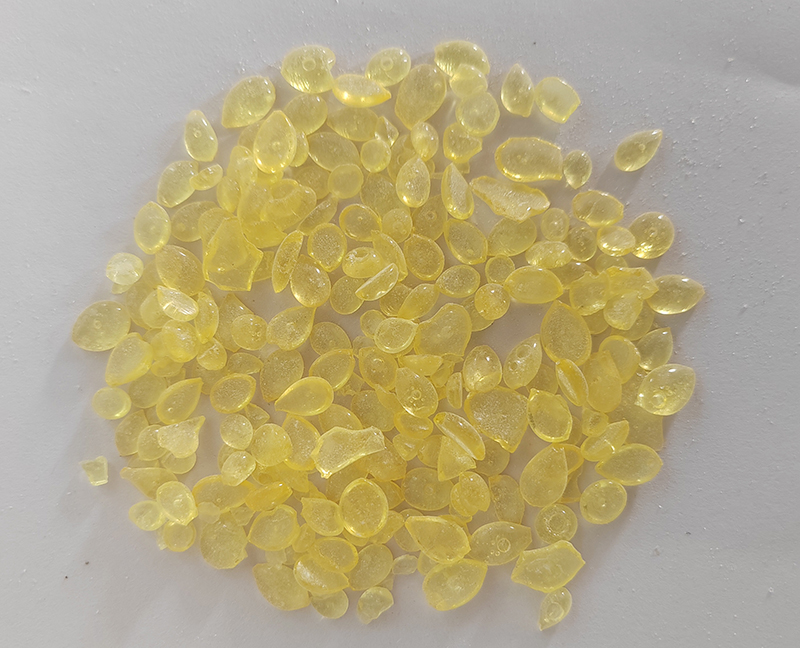
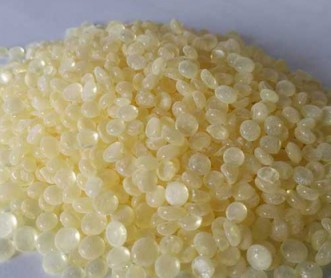
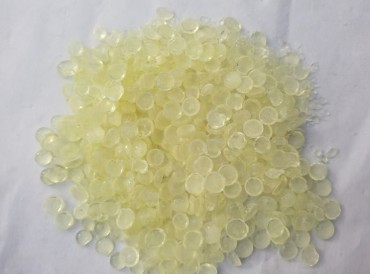
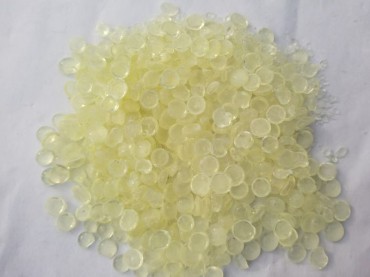
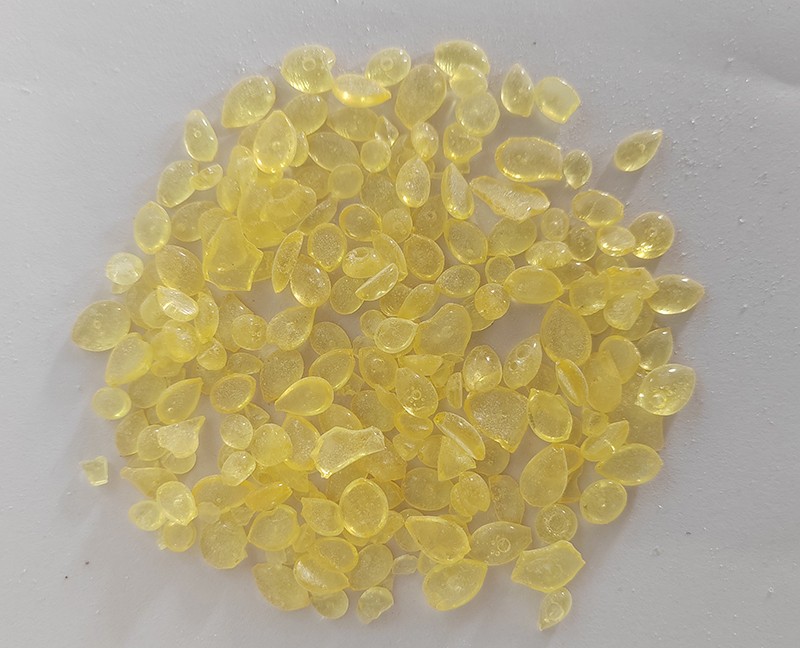
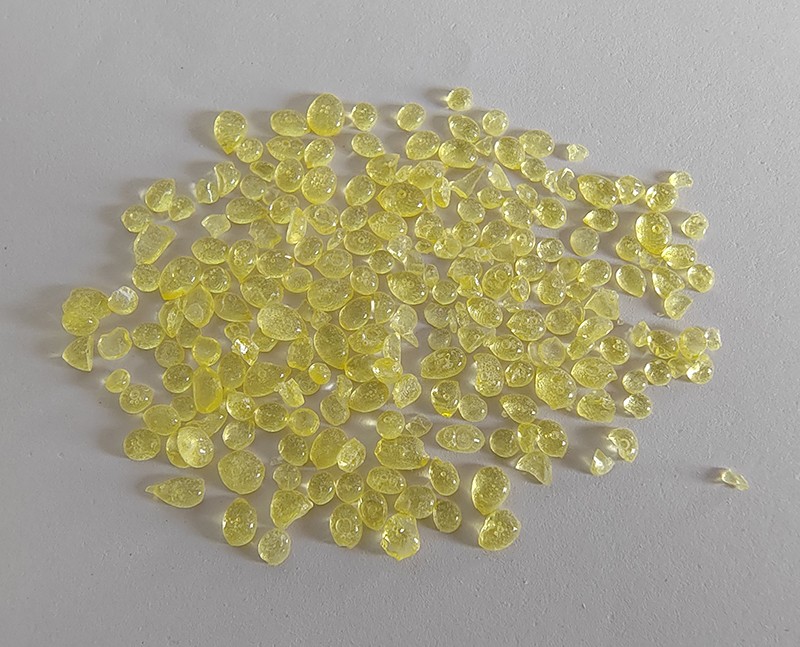
1. Light yellow transparent, brittle thermoplastic solid
2. Non-toxic and odorless, radiation-resistant and anti-crystallization
3. Relatively stable to oxygen, heat and light, strong insulation to acid, alkali, electricity
4. Easily soluble in benzene, toluene, turpentine, gasoline, etc., insoluble in water, methanol and ethanol.
Product application areas: This product is used for hot melt adhesive, EVA hot melt adhesive, SIS, SBS hot melt adhesive, paper-plastic composite adhesive decorative universal adhesive, masking protective paper tape, pressure-sensitive adhesive, universal adhesive and other adhesives, rubber, plastic coatings, cables, color printing, paint, packaging, anti-rust oil and other industries
Structural Composition of C5 Petroleum Resin
1. Raw Material Source
C5 petroleum resin adopts the C5 fraction, a by-product from ethylene production via petroleum cracking, as monomer raw material. It is a mixture of C5 olefins in cracked gasoline. The core polymerizable monomers fall into three categories:
Isoprene
Piperylene
Cyclopentadiene / Dicyclopentadiene (DCPD)
Conventional aliphatic C5 petroleum resin is mainly polymerized from piperylene and isoprene; co-polymerized types incorporate a small amount of pentene, isopentene and other mono-olefins as regulating monomers.
2. Chemical Structure of Molecular Main Chain
C5 petroleum resin is an aliphatic thermoplastic non-polar hydrocarbon polymer without benzene rings (distinguished from C9 petroleum resin).
Main skeleton: Saturated / unsaturated aliphatic carbon chains and five-membered alicyclic structures
Repeating units: Alkyl and alkylene five-membered ring segments formed by addition polymerization of C5 olefins
Side groups: Short-chain alkyl groups such as methyl and ethyl with extremely low polarity
Residual groups: A small quantity of unsaturated double bonds at the end of molecular chains (bromine value characterizes double bond content)
Element composition: Only carbon and hydrogen, free of oxygen, nitrogen and halogens, featuring ultra-low acid value
Simplified Structural Characteristics
Linear structure with slight cyclic branching; molecular weight ranges from 300 to 3000
Narrow molecular weight distribution, no aromatic rings, strong overall hydrophobicity
Almost no polar functional groups (hydroxyl, carboxyl, ester groups) on molecules
3. Component Classification (By Resin Grade)
3.1 Pure Piperylene-based C5 Petroleum Resin (General Adhesive Grade)
Main component: Homopolymer segments of piperylene
Minor co-monomers: Isoprene, 1-pentene, 2-methylbutene
Features: Light color, good compatibility, optimal tackifying performance; mainstream product in the market
3.2 Mixed C5 Copolymer Resin (Economical Grade)
Ternary copolymer of piperylene, isoprene and a small amount of cyclopentadiene
Features: Low cost, adjustable softening point, widely used in road marking paints and rubber filling
3.3 Dicyclopentadiene Modified C5 Petroleum Resin (High Weather-resistant Grade)
Co-polymerized with dicyclopentadiene to introduce bicyclic alicyclic structures
Features: Higher softening point, enhanced water and chemical resistance, improved thermal stability, relatively darker color
4. Reference Proportion of Microstructural Components (Industrial General Raw Material Fraction)
|
Monomer Component |
Mass Ratio |
Function |
|
|
Piperylene |
35%~55% |
Provide initial tack and compatibility with rubber / EVA |
|
|
Isoprene |
10%~25% |
Adjust melt fluidity and improve low-temperature toughness |
|
|
Dicyclopentadiene (DCPD) |
5%~20% |
Raise softening point, water resistance and rigidity |
|
|
Mono-pentene olefins (pentene, isopentene) |
5%~15% |
Regulate molecular weight and reduce melt viscosity |
|
|
Saturated C5 alkanes (non-polymerizable) |
<3% |
Removed after polymerization with extremely low residual content |
|
5. Product Performance Corresponding to Key Structures
Free of aromatic rings: Far superior compatibility with polyolefins and rubber compared with C9 petroleum resin
Alkyl side chains + low polarity: Outstanding water, acid and alkali resistance
Alicyclic structures: Improve softening point, hardness and cohesion
Trace residual double bonds: Enable moderate crosslinking, inferior weather resistance to hydrogenated C5 petroleum resin
Pure hydrocarbon structure: Low acid value, low ash content and low VOC
6. Supplementary: Structural Difference of Hydrogenated C5 Petroleum Resin
Ordinary C5 petroleum resin: Contains unsaturated carbon-carbon double bonds on molecules, prone to oxidation and discoloration
Hydrogenated modified C5 petroleum resin: All double bonds are saturated, with fully saturated aliphatic chain segments, extremely light color and greatly upgraded weather resistance; specially used for high-end adhesive tapes and hygiene adhesives
 Address:Linzi District,Zibo City,Shandong Province
 E-mail:wanbang@wanbangresin.com
 WhatsApp:+8615053337101
China C5 hydrogenated petroleum resin supplier : Shangdong Wanbang New Materials Co., Ltd.
C5 hydrocarbon resin manufacturer has a wide range of applications, high quality, low price, and multiple uses.Welcome to consult.