 Language


More Language
Language
With the continuous development of modern chemical, coating, adhesive, rubber, and ink industries, resin materials play an increasingly vital role in industrial production. Among the various synthetic resin products, C9 hydrocarbon resin (a type of petroleum resin) is widely used in applications such as adhesives, coatings, inks, rubber, and road markings due to its excellent compatibility, tackifying properties, thermal stability, and processability.
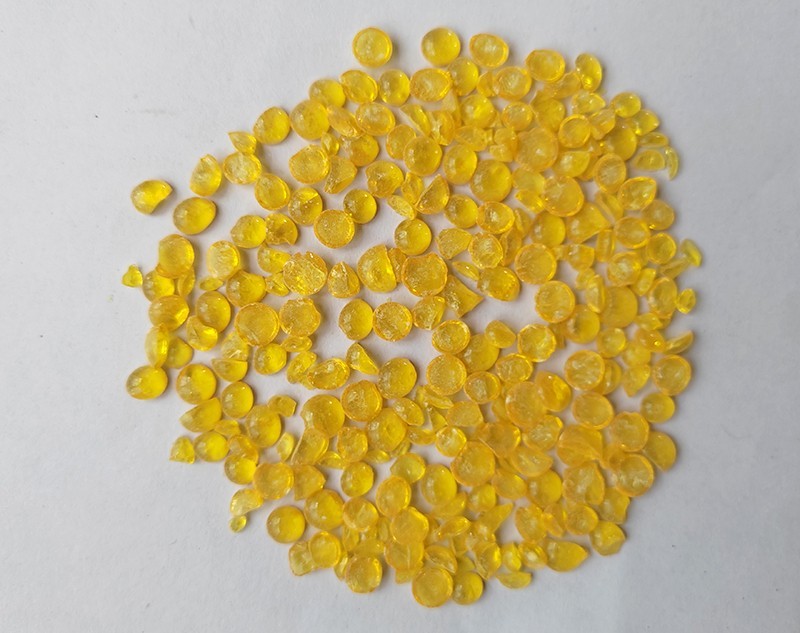
C9 hydrocarbon resin is commonly known as C9 petroleum resin. It is a thermoplastic resin produced primarily through the polymerization of C9 aromatic hydrocarbon fractions derived from petroleum cracking processes. The term "C9" refers to hydrocarbon substances characterized by nine-carbon components within the feedstock fraction. In practice, industrial feedstocks are typically mixed fractions composed of various aromatic hydrocarbons and other unsaturated compounds; consequently, C9 hydrocarbon resin is not composed of a single type of C9 molecule. Following polymerization and subsequent processing, the resulting resin product exhibits specific characteristics regarding softening point, color, acid value, and compatibility.
Depending on the production process and product specifications, C9 hydrocarbon resins can vary in color, softening point, and performance properties, making different grades suitable for diverse industrial formulations.
The production of C9 hydrocarbon resin is closely linked to the petrochemical industry. Significant quantities of by-products are generated during the petroleum cracking process used to produce basic chemical raw materials like ethylene. Specific C9 fractions, once separated and treated, serve as key raw materials for manufacturing C9 petroleum resin. The basic production process generally encompasses feedstock pretreatment, polymerization, post-treatment, and product refining.
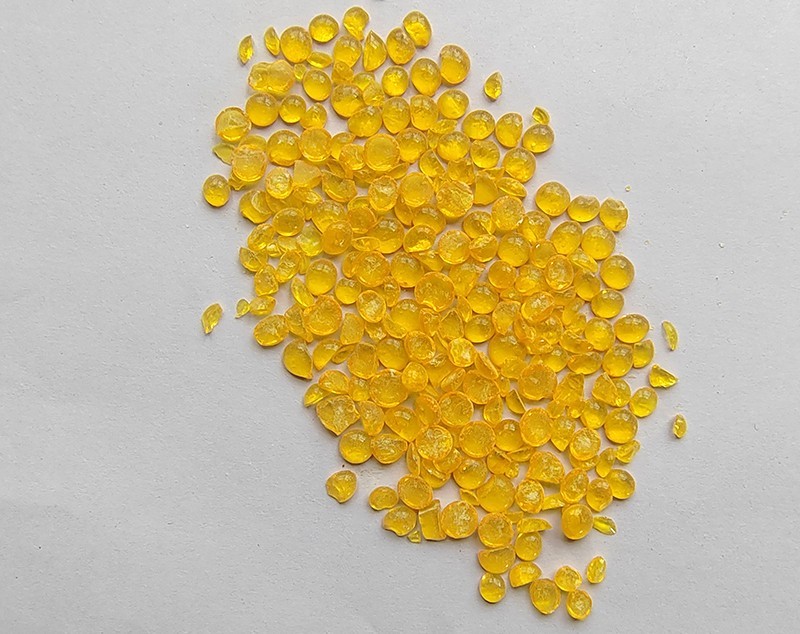
Initially, the C9 feedstock undergoes appropriate treatment to remove impurities that could interfere with the polymerization process. Subsequently, polymerization is carried out using specific catalyst systems and process conditions, transforming the unsaturated components of the feedstock into a resin structure with a higher molecular weight. After polymerization, post-treatment steps are required to ensure the product meets the desired specifications for softening point, color, purity, and other performance metrics. The final C9 hydrocarbon resin product typically takes the form of solid granules, flakes, or other shapes convenient for transport and use.
The suitability of C9 hydrocarbon resins for various industries is closely linked to their specific performance characteristics:
(1) Good tackifying properties: In adhesives and sealants, C9 resins serve as tackifiers, helping to enhance the adhesive performance of the formulation.
(2) Good compatibility: C9 resins are compatible with various synthetic resins, rubbers, and other organic materials. This compatibility allows them to be incorporated into diverse industrial formulations as modifying agents.
(3) Thermal stability: C9 resins maintain relatively stable performance within appropriate operating temperature ranges.
(4) Improvement of surface properties: In coatings and inks, C9 resins can influence gloss, hardness, and film-forming characteristics.
(5) Good processing adaptability: C9 hydrocarbon resins can be heated, blended, and modified to suit different formulations.
However, performance varies between different grades of C9 resins; therefore, selection should be based on specific product technical specifications during actual use.
Adhesives represent a major application area for C9 hydrocarbon resins. In adhesive formulations, the base polymer typically forms the structural backbone, while the tackifying resin enhances adhesion between the material and the substrate. With their inherent tackifying capabilities, C9 hydrocarbon resins are suitable for use in certain hot-melt adhesives, pressure-sensitive adhesives, and other industrial adhesive systems.
Depending on the specific formulation, they can help improve initial tack, overall adhesion, wetting properties, processability, and—to some extent—water resistance. Different adhesive systems have varying requirements regarding resin softening points and compatibility.
Consequently, in actual production, formulations must be designed based on the specific base polymer and other additives; one cannot simply assume that any C9 resin is suitable for every type of adhesive.
The coatings industry is another significant application area for C9 hydrocarbon resins. C9 resins can serve as film-forming or modifying components in certain coating systems. Incorporating the appropriate C9 resin can enhance specific coating properties—such as gloss, hardness, adhesion, water resistance, and drying speed—depending on formulation requirements. C9 resins are particularly valuable in industrial coatings, metal coatings, and certain solvent-based coating systems.
However, since coating formulations typically comprise resins, solvents, pigments, fillers, and various additives, the actual performance of C9 resin must be evaluated within the context of the complete formulation.
Resins play several roles in printing inks, including aiding pigment dispersion, facilitating ink film formation, and improving adhesion between the ink and the substrate.
C9 hydrocarbon resins are suitable for certain ink systems and can improve properties such as gloss, adhesion, drying speed, flow characteristics, and film-forming ability, depending on the formulation. Resin materials are crucial components of ink formulations in sectors such as packaging, commercial, and industrial printing. Since different printing methods impose varying requirements on ink performance, the selection of C9 resin must take into account factors such as printing speed, substrate type, solvent system, and end-product specifications.
The rubber industry is another major market for petroleum resins. In certain rubber formulations, C9 resins serve as tackifiers or modifiers. They help improve adhesion between rubber and other materials while also influencing processing characteristics. Petroleum resins are used—as formulation needs dictate—in products such as rubber goods, industrial tapes, and composite rubber materials. However, given the varying requirements for elasticity, hardness, heat resistance, and aging resistance across rubber products, resin selection must be tailored to the specific type of rubber and the formulation in question.
While both C9 and C5 resins are classified as petroleum resins, they differ in terms of raw material composition and performance characteristics.
C5 petroleum resins are typically derived from C5 aliphatic fractions; due to their excellent tackifying properties, they are frequently used in adhesives, rubber products, and related applications. C9 petroleum resins are primarily derived from C9 aromatic fractions and typically exhibit favorable characteristics such as aromaticity, hardness, and gloss; consequently, they are widely used in coatings, inks, and certain rubber and adhesive systems.
Additionally, there are specially modified petroleum resins that combine various raw materials and production processes to achieve distinct properties. Therefore, when purchasing, one should not rely solely on the generic name "petroleum resin" but should instead evaluate specific product parameters such as softening point, color, solubility, compatibility, and application scope.
When selecting C9 hydrocarbon resins, the intended end-use must first be clearly defined.
For adhesives, priority should be given to tackifying ability and compatibility with the base polymer.
For coatings, key considerations include color, softening point, gloss, and weather resistance.
For inks, compatibility with pigments, solvents, and other resins is essential.
For road marking applications, the choice should be based on the marking material's formulation and specific application requirements.
Product specifications may vary between manufacturers; therefore, purchasing enterprises should select the appropriate grade based on their specific application needs.
C9 hydrocarbon resins are generally classified as solid industrial raw materials; storage requires maintaining packaging integrity and a dry environment. Products should be stored in accordance with the supplier's technical specifications, avoiding prolonged exposure to unsuitable conditions such as high temperatures or excessive humidity.
As properties like color and softening point may vary between batches, industrial enterprises should implement effective batch management during large-scale production. For products requiring long-term storage, the condition of the packaging and the product itself should be inspected regularly. Proper storage not only minimizes quality degradation but also helps ensure the stability of subsequent production processes.
C9 hydrocarbon resins are not raw materials limited to a single type of product. By selecting resins with varying softening points, colors, and performance characteristics, manufacturers can meet the requirements of diverse industrial formulations. As industries such as adhesives, coatings, inks, rubber, and road materials continue to evolve, the demand for high-performance resin materials is also constantly changing. In the future, C9 hydrocarbon resins will continue to play a significant role in industrial formulations and material modification. For purchasers and manufacturers, understanding the basic properties, primary applications, and product specifications of C9 hydrocarbon resins—and selecting the appropriate grade based on specific production processes—is crucial for enhancing product stability and production efficiency.
 Address:Linzi District,Zibo City,Shandong Province
 E-mail:wanbang@wanbangresin.com
 WhatsApp:+8615053337101
China C5 hydrogenated petroleum resin supplier : Shangdong Wanbang New Materials Co., Ltd.
C5 hydrocarbon resin manufacturer has a wide range of applications, high quality, low price, and multiple uses.Welcome to consult.