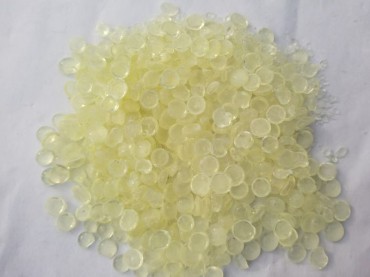
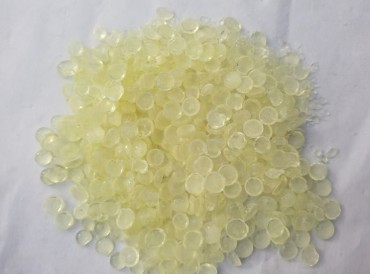
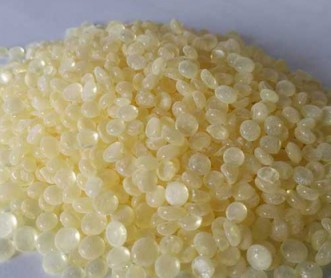
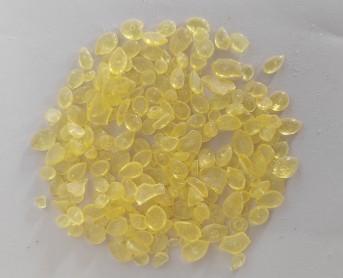
In the vast world of chemistry and petroleum industry, there is a material that has attracted much attention for its unique properties and wide application fields, which is tar resin. In recent years, with the advancement of technology and continuous improvement of processes, its application in various fields has become increasingly widespread, becoming an indispensable key raw material for many industries. Today, let's step into the world of tar resin together and uncover its mysterious veil.
1. Definition and Source
1.Definition: Tar resin is a polymer product mainly produced from petroleum derivatives through a series of chemical reactions.
2.Source: Widely available and can be extracted from coal tar, petroleum tar, or other heavy hydrocarbon compounds.
2. Characteristics and Applications
👂 Features:
1.Adsorption performance: it can form gel like substances in the solvent, has good adsorption performance for liquids, and can adsorb various chemical substances and biological substances such as oils, organic solvents, dyes, pigments, etc.
2.Dispersion and stability: Tar resin has good dispersion and stability, and can be uniformly mixed with other materials to form stable suspensions or solutions.
3.Chemical resistance: It has chemical stability to acids and bases and can resist the erosion of various chemical substances.
4.Other characteristics: Tar resin also has low acid value, good miscibility, water resistance, ethanol resistance, as well as good regulation of viscosity and thermal stability.
👂 Purpose:
1.Coatings industry: Tar resin can be mixed with various dry oils to produce paints, and various resins and pigments can be mixed to produce coatings of various colors. These coatings are widely used for anti-corrosion and decoration of metal and concrete surfaces such as vehicles, ships, bridges, etc.
2.Rubber industry: an additive suitable for natural synthetic rubber, which can improve the processing performance, hardness, and elasticity of rubber. Tar resin plays an important role as a plasticizer and reinforcing material in the production of rubber products such as rubber hoses, V-belts, and tires.
3.Adhesive and pressure-sensitive tape: Tar resin has good adhesion and is a commonly used tackifier in adhesives and pressure-sensitive tapes. It can improve the water resistance and adhesive strength of the adhesive.
4.Ink industry: Tar resin has water resistance, melt resistance, and drying resistance, and is an important component in ink. It can improve the printing performance and color vividness of ink.
5.Other fields: It can also be used to produce modified asphalt, refractory binders, paper adhesives, plastic modifiers, etc. In the field of building materials, tar resin is the main additive for asphalt materials, used to improve the flexibility and durability of road surfaces.
3. Types and Preparation
1.Types: There are many types, which can be divided into coal tar resin, petroleum tar resin, etc. according to different raw materials and preparation processes. Among them, Gumaron resin, as an important tar resin, has a wide range of applications in industries such as rubber, tires, and V-belts.
2.Preparation: The preparation process usually includes steps such as raw material pretreatment, catalytic polymerization, separation and purification. By controlling reaction conditions and adding functional additives, tar resin products with different properties and application fields can be prepared.
Overall, tar resin is a high-performance and widely used chemical raw material. With the advancement of technology and continuous improvement of processes, the application fields of tar resin will become more extensive, providing more support and guarantee for the development of various industries.

 Language


 Address:Linzi District,Zibo City,Shandong Province
 E-mail:wanbang@wanbangresin.com
 WhatsApp:+8615053337101