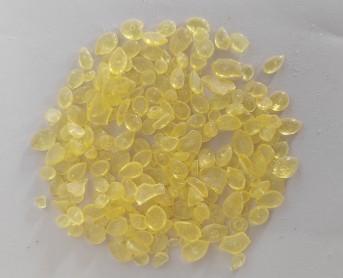
C5 petroleum resin is a mainstream tackifying resin in the adhesive industry.Thanks to its excellent compatibility with non‑polar polymers,prominent initial tack,favorable water resistance and cost‑effective performance,it is widely used in various hot‑melt adhesives,pressure‑sensitive adhesives and solvent‑based rubber adhesive systems.It serves as a critical raw material to adjust initial tack,peel strength and substrate wettability.Nevertheless,C5 petroleum resin features low polarity and delivers limited adhesion to high‑polarity substrates.Formula selection shall be reasonably carried out in combination with matrix materials and application scenarios.
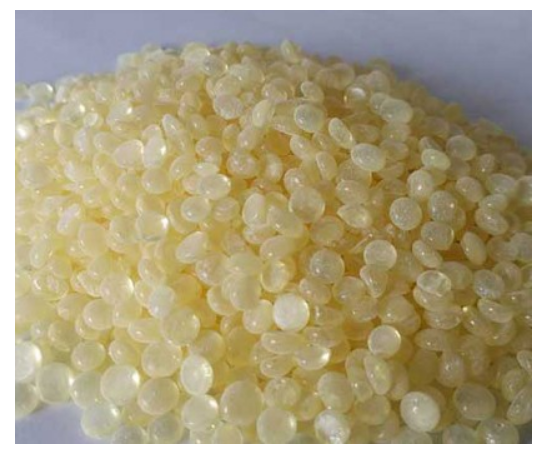
EVA‑based hot‑melt adhesives represent the most classic matching formula for C5 petroleum resin.EVA hot‑melt adhesives are mostly applied to carton sealing,book binding,woodworking lamination and packaging edge‑banding,with ethylene‑vinyl acetate copolymer as the matrix.Boasting good miscibility with EVA,C5 petroleum resin can effectively improve the initial tack of colloids and enhance melt fluidity,enabling the adhesive layer to better wet substrates such as paperboards and wood,and reducing glue overflow and adhesive failure.In practical formulas,the addition amount of C5 generally accounts for 30‑60 parts,used together with paraffin wax and antioxidants.If higher requirements for yellowing resistance and low odor are raised,hydrogenated C5 petroleum resin can be adopted for high‑grade transparent packaging adhesives.
C5 petroleum resin works well with SBS/SIS thermoplastic elastomer hot‑melt pressure‑sensitive adhesives.SIS systems are mostly used for packaging tapes,label adhesives and sanitary product adhesives,while SBS systems are applied to fabric‑backed tapes and industrial pressure‑sensitive adhesives.C5 petroleum resin can infiltrate the soft phase of elastomers,greatly improving initial tack and 180°peel strength,optimizing low‑temperature bonding performance and balancing viscosity and cohesion.Ordinary C5 petroleum resin is used for general‑purpose tape products,whereas hydrogenated C5 petroleum resin is applied to light‑colored,low‑odor and aging‑resistant high‑end labels and non‑woven fabric pressure‑sensitive adhesives.It should be noted that the softening point of C5 petroleum resin shall match elastomers to avoid crystallization and delamination.
C5 petroleum resin is also extensively adopted in solvent‑based rubber adhesives.For solvent‑based adhesives based on natural rubber,SBS and neoprene,commonly seen in footwear adhesives,carpet back‑coat adhesives and decorative laminating adhesives,C5 petroleum resin enjoys good solubility in hydrocarbon solvents.When added into formulas,it improves bonding performance on rubber,leather,fabrics and plastics,optimizes coating wettability,and can partially replace rosin and terpene resins to cut production costs.A small amount of rosin ester can be compounded in this system to achieve favorable adhesion on polar substrates.
C5 petroleum resin is also an optional material for polyolefin‑based hot‑melt adhesives(APAO).Such adhesives are mostly used for plastic component assembly and protective film bonding.With low‑polarity matrix,C5 aliphatic resin shows better compatibility than C9 aromatic resin and improves bonding performance for hard‑to‑bond polyolefin substrates.
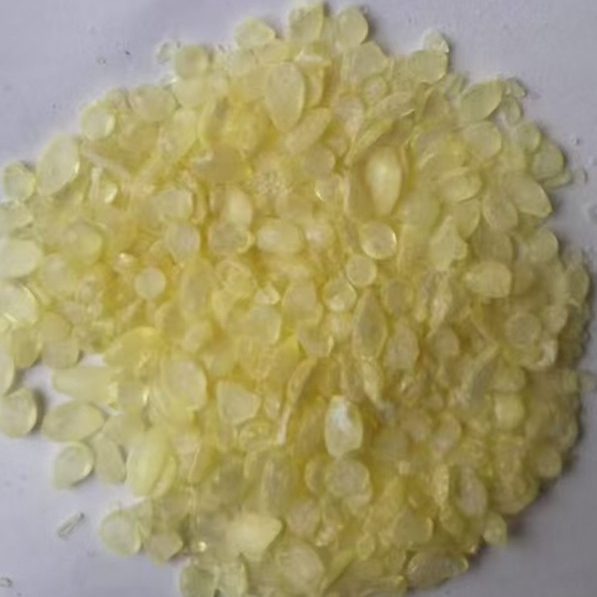
Its limitations in formulas should also be recognized.With weak polarity,C5 petroleum resin suffers poor compatibility and tends to delaminate and precipitate when directly applied to high‑polarity adhesives such as epoxy and polyurethane.For high‑polarity substrates including metals and nylon,ideal bonding strength can hardly be achieved merely by C5 petroleum resin,and polar modified resins are required for matching use.
In actual selection,apart from distinguishing ordinary C5 and hydrogenated C5 petroleum resin,attention shall be paid to softening point,color number and batch stability.High‑softening‑point grades focus on enhancing holding tack and heat resistance,while low‑softening‑point grades prioritize initial tack and low‑temperature performance.Comprehensive screening based on matrix,bonded substrates and aging resistance requirements can bring the optimal tackifying effect of C5 petroleum resin into full play.

 Language


 Address:Linzi District,Zibo City,Shandong Province
 E-mail:wanbang@wanbangresin.com
 WhatsApp:+8615053337101