How to Select Road Sign Paint Resin
Resin serves as the core film-forming framework of road sign paint,directly determining the adhesion,weather resistance,high-temperature anti-flow performance,low-temperature crack resistance,long-term reflectivity and service life of traffic markings.Many coating manufacturers only compare unit prices during procurement while ignoring the matching degree between resin indicators and construction scenarios.As a result,the markings tend to soften and stick to vehicle tires in summer,crack and peel off in winter,turn yellow and lose reflectivity in a short time,and require frequent repainting,which greatly increases costs.To select resins compatible with your production lines and engineering conditions,you need to first classify marking construction processes,verify key physical and chemical indicators,match resins with pavement and climatic environments,and comprehensively evaluate long-term operating costs.
I.Select Resin Categories According to Marking Construction Processes
Road sign paints for different construction processes require completely different resin systems.Wrong resin selection will directly cause formula delamination,construction failures and unqualified finished products.
1.Hot-melt road markings(widely used on expressways and main arterial roads)
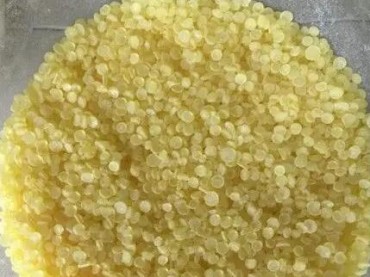
Aliphatic C5 petroleum resin is the preferred option.Hydrogenated C5 resin and C5/C9 copolymer resin can be adopted for high-end long-durability markings.
C5 resin features light color and good melt fluidity,with excellent compatibility with quartz sand and glass beads.It spreads evenly after melting and firmly wraps reflective aggregates to maintain stable night reflection.Its optimal softening point ranges from 95 to 105℃,matching the hot-melt construction temperature of 180–220℃.
Ordinary aromatic C9 resin is not recommended for independent use in hot-melt markings,as it easily yellows and powders under UV radiation;it can only be mixed in small amounts to adjust hardness.Hydrogenated C5 resin has a lower iodine value and stronger oxidation resistance,suitable for outdoor high-durability projects exposed to intense sunlight in hot southern regions.
2.Two-component MMA cold-applied markings(anti-slip and colored markings for expressways)
Modified methyl methacrylate resin is the core raw material.After crosslinking and curing,the paint film becomes dense,resistant to vehicle rolling,oil stains and extreme temperature differences.It is specially used for heavy-duty roads,airport yards and colored anti-slip pavements,with a service life of 2 to 3 years.
3.Water-based/solvent-based cold-applied markings at normal temperature(temporary markings for residential quarters and factories)
Silicone-acrylic and pure acrylic emulsion resins are adopted for water-based products,featuring low VOC and room-temperature construction.Thermoplastic acrylic resin is used for solvent-based paint with fast drying speed,yet its wear resistance and weather resistance are inferior to hot-melt and two-component markings,making it fit for low-traffic areas with short service demands.
II.Core Indicator Screening Standards for Hot-Melt Marking Resins(Mandatory Inspection Before Purchase)
Hot-melt Road sign paint resin accounts for the largest market share.Four key indicators directly affect marking quality,and suppliers’test reports must be checked before purchasing:
1.Softening point(optimal range:95–105℃)
If the softening point is lower than 90℃:Markings will soften under high pavement temperature in summer,forming tire indentations and accumulating dust contamination.
If the softening point is higher than 110℃:Extra heat energy is required for melting,increasing fuel consumption;the paint film turns brittle in cold winter and peels off in large areas.
2.Iodine value(≤30gI₂/100g)
The iodine value reflects the content of unsaturated double bonds in resin;the lower the value,the stronger the anti-oxidation and anti-yellowing performance.Ordinary resins with high iodine values turn yellow rapidly under long-term sunlight,covering the reflection of glass beads and losing visibility within 3–6 months.Hydrogenated resins have extremely low iodine values and retain a white appearance under prolonged outdoor exposure.
3.Acid value(≤0.5mgKOH/g)
Excessively high acid value will cause flocculation with alkaline fillers such as titanium dioxide and calcium carbonate,resulting in agglomerated coating and poor dispersion.Granules and pits will appear during spraying or scraping,damaging reflectivity and surface smoothness.
4.Color tone and thermal stability
Select pale water-white resin with Gardner color number below 3#.It shall not blacken or release pungent odor when heated at a constant temperature of 200℃,and will not decompose or carbonize during high-temperature melting to avoid impurity blockage of hot-melt machine outlets.
III.Match Resin Models Based on Construction Environments
1.Hot and rainy southern regions
The pavement surface temperature can exceed 70℃in summer.High-softening-point C5 resin or hydrogenated C5 resin is prioritized to enhance high-temperature creep resistance and prevent markings from flowing and sticking to tires.Meanwhile,its outstanding water and weather resistance avoids peeling after long-term rainwater immersion.
2.Cold northern regions with drastic temperature differences
There are huge temperature fluctuations between day and night as well as summer and winter.Resins with a softening point of around 100℃and good toughness are selected instead of merely pursuing ultra-high softening points.Such resins balance high-temperature stability and low-temperature flexibility to prevent cracking and edge peeling in winter.
3.Heavy-duty asphalt pavements on expressways
With heavy trucks passing frequently,resins with moderate viscosity and strong cohesive force are required.The cured paint film balances hardness and toughness to firmly bind aggregates,preventing anti-slip particle shedding and marking abrasion whitening.
4.Municipal cement pavements
Cement substrates have large pores and high adhesion requirements.C5 copolymer resin with excellent wettability is selected to penetrate and fill tiny pavement pores,greatly improving paint film bonding strength and reducing peeling and edge warping.
IV.Formula Dosage Ratio and Cost-Performance Evaluation
The standard addition amount of resin in hot-melt marking coatings is 18%–22%,and more resin does not equal better performance.Excessive resin leads to overly soft and deformable paint films;insufficient resin drastically reduces bonding strength and wear resistance,causing loose aggregate shedding.
Do not judge Road sign paint resin solely by the unit tonnage price during purchasing;calculate comprehensive costs comprehensively:
Low-cost inferior resins exceed standard limits of iodine value and acid value,requiring extra antioxidants and dispersants in formulas and raising auxiliary material costs.
Markings made of poor weather-resistant resins need repainting every six months.The labor,machinery and traffic closure costs for construction far exceed the price gap of raw materials.
Premium hydrogenated resins can double the service life of markings,significantly cutting the frequency of later maintenance and repainting and lowering long-term comprehensive costs.
V.Practical Tips to Avoid Mistakes in Resin Selection
Reject non-standard resins without complete test reports.Conduct lab trials before bulk purchase:observe melt fluidity,test low-temperature bending after cooling,and check yellowing degree after 7 days of outdoor exposure.
Do not mix resins from different systems.Hot-melt petroleum resin has poor compatibility with acrylic and epoxy resin;random compounding will result in paint film delamination and loss of gloss.
Prioritize low-odor,low-VOC hydrogenated C5 resin for environmentally friendly export projects to meet overseas environmental standards for road materials.
Choose light-colored resin for colored markings.Dark-base resin will cause pigment whitening and dull color,increasing the required dosage of color powder.
The core principle of selecting Road sign paint resin is prioritizing construction process matching,taking physical and chemical indicators as benchmarks,adapting resins to local climate and pavement conditions,and calculating cost-performance based on long service life.Standard aliphatic C5 resin is suitable for hot-melt main road markings;hydrogenated C5 resin is upgraded for high-durability outdoor projects;MMA acrylic resin is adopted for anti-slip colored heavy-duty markings;water-based silicone-acrylic emulsion matches room-temperature markings for residential areas.Strictly verify three core parameters:softening point,iodine value and acid value.Select resins according to regional climate,pavement type and traffic volume of projects.This ensures clear reflective markings free from cracking and peeling,reduces repeated repainting costs and improves the market competitiveness of finished coating products.

 Language


 Address:Linzi District,Zibo City,Shandong Province
 E-mail:wanbang@wanbangresin.com
 WhatsApp:+8615053337101