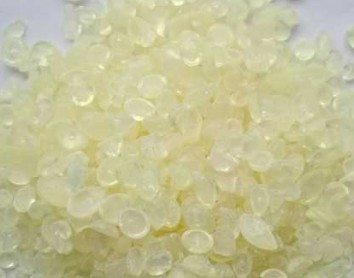
Hot-melt road markings serve as core traffic marking materials for highways,urban roads and factory pavements.Exposed to long-term tire rolling,rainwater immersion,temperature fluctuations between day and night,as well as ultraviolet radiation,conventional markings commonly suffer from peeling,abrasion-induced whitening and rapid attenuation of reflectivity.Incorporating dedicated
C5 hydrocarbon resin into coating formulations reinforces coating bonding strength and overall hardness at the molecular level,greatly boosting the adhesion and wear resistance of markings and extending their service life.This optimization solution has been widely adopted by current marking coating manufacturers.
I.C5 Hydrocarbon Resin Greatly Enhances Marking Adhesion to Prevent Peeling and Spalling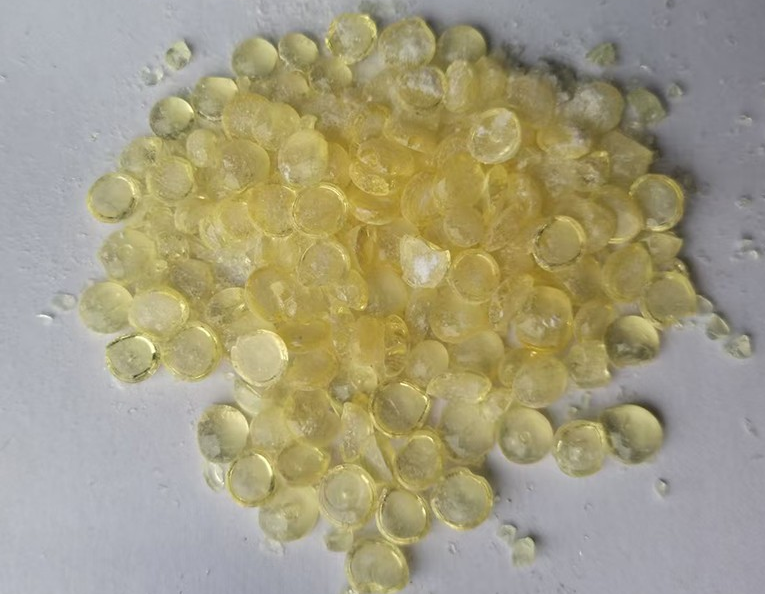
Road markings are applied on two substrate types:asphalt pavements and concrete pavements.Conventional hot-melt coatings lack effective tackifying components,resulting in weak bonding between cured coatings and road surfaces.Water penetration in rainy seasons and low-temperature shrinkage in winter easily trigger bulk spalling.As an aliphatic petroleum resin,C5 hydrocarbon resin features a non-polar backbone with trace polar groups.It boasts excellent compatibility with asphalt substrates and forms hydrogen-bond anchoring effects on concrete surfaces,significantly reducing the wetting angle of coatings on pavements.During hot construction,it fully penetrates tiny cracks on road surfaces and forms lock-type bonding structures after curing.
Test data shows that marking coatings formulated with a proper proportion of C5 hydrocarbon resin achieve a peel strength above 1.8 MPa,an approximately 30%improvement over standard formulations.The coatings resist edge warping,cracking and peeling under high-temperature pavement softening in summer and frost heave in cold winters,delivering outstanding performance on high-speed arterial roads and heavy-traffic logistics routes with dense vehicle flow.In addition,C5 hydrocarbon resin exhibits favorable compatibility with titanium dioxide,calcium carbonate fillers and glass beads,tightly encapsulating reflective microbeads to avoid premature bead loss and maintain clear night reflectivity over the long term.
II.Rigid Molecular Structure Markedly Improves Marking Wear Resistance
Repeated tire friction constitutes the primary cause of marking degradation.Conventional resins have low crosslink density,leading to rapid thickness loss and blurred patterns after prolonged abrasion.Rich in rigid cyclic molecular units,C5 hydrocarbon resin increases coating hardness and elastic modulus after curing,forming a dense wear-resistant protective layer that effectively withstands tire friction damage.
Accelerated wear tests reveal that hot-melt markings containing standard C5 hydrocarbon resin record a mass loss of only 0.028 g after a thousand friction cycles,meeting and exceeding national standard limits.In field applications under humid southern climates and frigid northern conditions,the markings retain over 82%of their original thickness after three years,far outperforming ordinary markings without C5 hydrocarbon resin.The resin endows coatings with balanced toughness,combining hardness and bending resistance to avoid embrittlement and powder shedding under temperature changes,cutting the frequency of routine road marking repairs and lowering overall road maintenance costs.
III.Optimized Construction Performance and Enhanced Comprehensive Marking Quality
Beyond its core advantages of wear resistance and adhesion,C5 hydrocarbon resin optimizes processing and construction performance of hot-melt coatings.It delivers moderate melt fluidity;when constructed at 180–200°C,the coating spreads smoothly to form uniform markings without breakages or uneven thickness.Fast curing shortens road closure time and allows early traffic resumption after construction.
It features excellent thermal stability,resisting yellowing and decomposition under prolonged high-temperature melting to sustain long-term whiteness of markings.The resin also offers robust water resistance,acid-alkali resistance and anti-UV aging performance to prevent discoloration and gloss loss under long-term outdoor exposure.When compounded with rosin,EVA and polyethylene wax,it maintains stable formulation compatibility,uniformly dispersing fillers without sedimentation and enabling mass production on large-scale hot-melt marking coating production lines.
IV.C5 Hydrocarbon Resin Selection Guide for Different Working Conditions
Ordinary urban roads and community roads:Conventional piperylene-based C5 hydrocarbon resin balances adhesion and production costs.
Highways and national trunk roads with heavy loads:High-hardness C5 hydrocarbon resin with narrow molecular weight distribution is selected to strengthen anti-abrasion and anti-rolling performance.
Plateaus and high-sunlight exposure regions:Hydrogenated C5 hydrocarbon resin is preferred for anti-UV aging and long-term resistance to yellowing and discoloration.
As a functional raw material exclusive to hot-melt road markings,C5 hydrocarbon resin delivers core value by strengthening pavement adhesion and coating wear resistance,while simultaneously optimizing construction performance,weather resistance and reflectivity.Road markings formulated with C5 hydrocarbon resin resist peeling and abrasion and enjoy extended maintenance cycles.They not only guarantee clear and safe traffic identification on roads but also substantially reduce road construction and long-term maintenance expenses,making them an indispensable core raw material for all types of hot-melt marking coatings.

 Language


 Address:Linzi District,Zibo City,Shandong Province
 E-mail:wanbang@wanbangresin.com
 WhatsApp:+8615053337101