 Language


More Language
Language
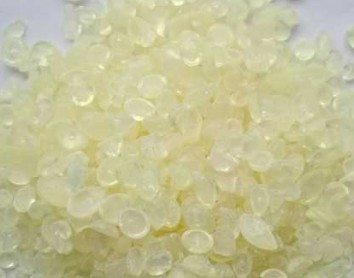
In the vast world of chemical materials, C5 hydrocarbon resin is like a shining star, emitting a unique and charming light. It originates from the byproduct of petroleum cracking to produce ethylene - C5 fraction, which could have been considered a "waste" material. Through clever processing and transformation, it has become an indispensable key material in many industrial fields. C5 hydrocarbon resin, with its excellent physical and chemical properties, has shown great potential in various industries such as adhesives, coatings, and rubber processing, profoundly influencing our daily life and industrial production. Next, let's delve into the rich and diverse uses of C5 hydrocarbon resins together.
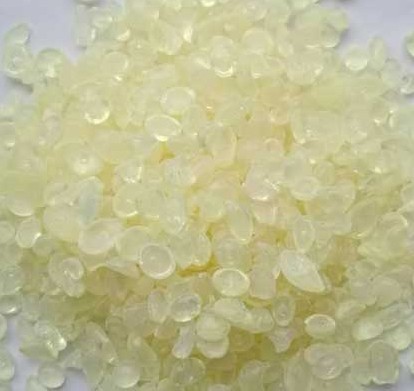
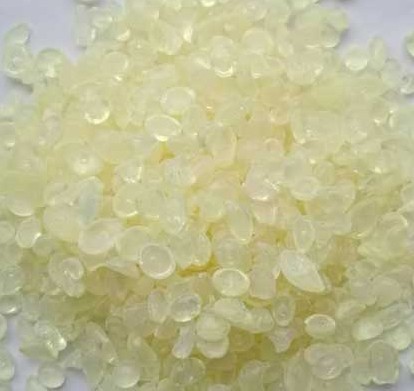
In recent years, with the advancement of hydrogenation technology, the development of hydrogenated C5 hydrocarbon resins has further expanded their application boundaries. The hydrogenation process significantly improves the color stability and UV resistance of the resin by saturating the unsaturated double bonds in the resin molecules, enabling it to meet higher end application requirements, such as light colored coatings, transparent adhesives, and other fields with strict appearance requirements. This hydrogenated C5 hydrocarbon resin can achieve a water white or light yellow color while maintaining the excellent performance of the base resin, providing the possibility for product upgrades and innovations.
In the field of adhesives and sealants, C5 hydrocarbon resin is an efficient tackifier that significantly improves adhesive performance by adjusting the system's adhesion, cohesion, and interfacial affinity. Its mechanism of action is mainly based on the thickening effect of the resin, which reduces the surface energy of the elastomer, enhances the wetting ability of the adhesive to the adhered material, and thus establishes a firm bonding interface. The good compatibility of C5 hydrocarbon resin with various matrix resins enables it to be uniformly dispersed in the adhesive system, forming a stable microstructure and avoiding performance degradation caused by phase separation.
In the formula of hot melt adhesive, C5 hydrocarbon resin is one of the key components, which is used in combination with basic polymers such as EVA (ethylene vinyl acetate copolymer) and SBS (styrene butadiene styrene block copolymer) to form the basic skeleton of hot melt adhesive. Hot melt adhesive, as an environmentally friendly adhesive, does not contain solvents. It is melted and applied by heating, and forms a solid bond after cooling. C5 hydrocarbon resin mainly provides initial adhesion and holding adhesion, ensuring that the substrate can establish initial adhesion in a short period of time after gluing and maintain stable adhesive strength during long-term use. Compared with traditional rosin resin, C5 hydrocarbon resin has better thermal stability, is less prone to oxidation and yellowing under high temperature production conditions, and can maintain stable colloidal color. At the same time, its molecular weight distribution is controllable, which is conducive to adjusting melt viscosity and improving sizing processability.
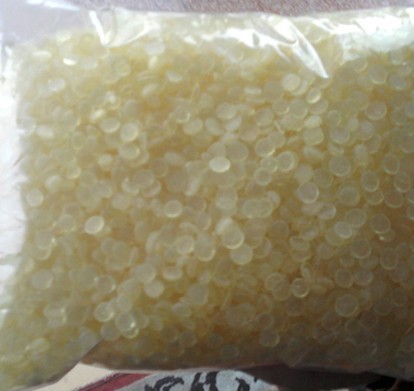
Pressure sensitive adhesive products (such as tapes, labels, etc.) are another important application area of C5 hydrocarbon resins. In this field, C5 hydrocarbon resins are combined with elastomers such as SIS (styrene isoprene styrene block copolymer) and natural rubber to endow pressure-sensitive adhesives with necessary viscoelastic properties. The addition of C5 hydrocarbon resin can significantly improve the peel strength and adhesion of pressure-sensitive adhesives, while maintaining appropriate initial adhesion, making the tape easy to apply and less prone to detachment. Compared with aromatic C9 resins, C5 hydrocarbon resins have lighter colors and better UV stability due to their aliphatic properties, making them particularly suitable for preparing transparent or light colored pressure-sensitive adhesive products. In addition, the non-polar characteristics of C5 hydrocarbon resin make it have good adhesion to various non-polar substrates such as polyethylene and polypropylene, expanding the application range of pressure-sensitive adhesives.
Table: Main functions of C5 hydrocarbon resin in adhesives and sealants
|
Application Field |
Application Field |
Mechanism of Action |
|
Hot Melt Adhesive |
Provide initial adhesion and holding adhesion |
Reduce the surface energy of the elastomer and enhance interfacial wettability |
|
Pressure-Sensitive Adhesive |
Adjust viscoelastic properties |
Balance initial tack, peel strength, and holding adhesion |
|
Sealant |
Improve adhesion |
Enhance wettability to the substrate and reduce water absorption rate |
In the field of road marking paint, C5 hydrocarbon resin is one of the key components of hot-melt road marking coatings. This type of coating needs to have the characteristics of rapid curing, excellent wear resistance, and long-lasting weather resistance to withstand frequent wheel crushing, climate change, and ultraviolet radiation. C5 hydrocarbon resin is combined with components such as polyethylene wax, titanium dioxide, and glass microspheres to form a road marking paint system with balanced performance. In the formula, C5 hydrocarbon resin provides the necessary adhesion force to firmly attach the marking to asphalt or concrete pavement, while ensuring that the coating has suitable fluidity when heated and melted, making it easy to apply during construction spraying. Compared with other resins, C5 hydrocarbon resin prepared road marking paint has better aging resistance, can maintain vivid color contrast for a long time, and improve the safety of night driving.
Industrial protective coatings have extremely high requirements for corrosion resistance and durability. C5 hydrocarbon resins can be modified or compounded with other resins to be used in industrial protective coating systems. Especially in ship coatings and heavy-duty anti-corrosion coatings, C5 hydrocarbon resin can enhance the adhesion and water resistance of coatings, effectively block the penetration of corrosive media such as chloride ions and oxygen, and delay the corrosion process of substrates. C5 hydrocarbon resin can also be compatible with polar resins such as epoxy resin and chlorinated rubber. By optimizing the formula, the flexibility and hardness of the coating can be balanced, reducing coating cracking caused by substrate deformation. Compared with pure epoxy systems, composite coatings with C5 hydrocarbon resins usually have better initial properties and impact resistance, making them suitable for protection needs in fluctuating environments.
In the field of ink manufacturing, C5 hydrocarbon resin is mainly used in systems such as publishing printing ink and packaging ink. Due to its light color and good solubility, C5 hydrocarbon resin can form a homogeneous system with ink carriers such as mineral oil and vegetable oil, providing suitable rheological and drying properties. During the printing process, ink containing C5 hydrocarbon resin exhibits excellent transferability and dot reproducibility, ensuring clear images and bright colors in printed materials. At the same time, C5 hydrocarbon resin can enhance the adhesion of ink to various substrates such as paper and plastic film, reduce issues such as ink flying and fogging during the printing process, and improve printing quality and efficiency.
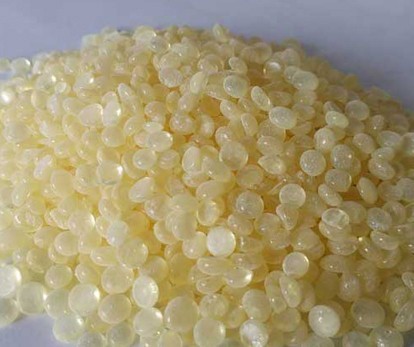
In the rubber industry, C5 hydrocarbon resin serves as a thickening agent and processing aid, significantly improving the self adhesiveness and inter adhesiveness of rubber materials, and enhancing the molding efficiency of rubber products in the production process. Rubber itself often lacks sufficient viscosity, leading to difficulties in molding and weak interlayer adhesion in processes such as tire manufacturing and conveyor belt production. The addition of C5 hydrocarbon resin can effectively improve the surface viscosity of rubber compounds, making it easy to locate and fix uncured rubber components, ensuring the structural integrity of the final product.
In the tire manufacturing process, C5 hydrocarbon resin is widely used in tread rubber, sidewall rubber, and various rubber composite parts. In tread rubber, C5 hydrocarbon resin not only provides necessary processing viscosity, but also optimizes the dynamic mechanical properties of the rubber material, affecting the rolling resistance and wet skid resistance of the tire. These two performance parameters are key indicators for evaluating the energy-saving and safety of tires. By adjusting the type and dosage of C5 hydrocarbon resin, this contradictory relationship can be balanced to a certain extent, and a tire tread rubber formula with excellent comprehensive performance can be prepared. C5 hydrocarbon resin has good compatibility with common rubbers such as natural rubber and butadiene rubber, and can be uniformly dispersed in the rubber matrix without migration or frosting, ensuring stable performance of tires during long-term use.
In addition to the tire industry, C5 hydrocarbon resin also plays an important role in the production of other rubber products such as conveyor belts, sealing strips, shock absorbers, etc. In these applications, C5 hydrocarbon resin mainly provides initial viscosity, making it easy to position rubber components during the molding process and ensuring the stability of the production process. Compared with traditional rosin thickeners, C5 hydrocarbon resins have the advantages of controllable molecular weight distribution and high thermal stability. They are not easily degraded or produce bubbles during rubber mixing and vulcanization processes, which is beneficial for improving the appearance quality and dimensional stability of products. In addition, the non-polar characteristics of C5 hydrocarbon resin make it well compatible with various rubber fillers such as carbon black and white carbon black, without affecting the dispersibility of the reinforcement system and maintaining the mechanical properties of the rubber matrix.
In the plastic industry, C5 hydrocarbon resin is used as a modifier to adjust the processing performance and physical properties of plastics. In polyolefin systems such as polyethylene and polypropylene, C5 hydrocarbon resins can reduce melt viscosity, improve the rheological properties of plastics during extrusion, injection molding, and other processes, and increase production efficiency. At the same time, C5 hydrocarbon resin can also serve as a compatibilizer to promote the blending of polyolefins with other polymers, improve the phase morphology and interfacial bonding of multicomponent systems. Due to the amorphous structure of C5 hydrocarbon resin, adding it to crystalline plastics can adjust the transparency and flexibility of the material, expanding the application range of plastics. For example, adding an appropriate amount of C5 hydrocarbon resin to BOPP film can improve its light transmittance and surface glossiness while maintaining basic mechanical strength.
In addition, C5 hydrocarbon resins are also used in building materials, such as asphalt modification and waterproofing membranes. In the field of asphalt modification, C5 hydrocarbon resin can improve the softening point and viscosity of asphalt, reduce its sensitivity to temperature changes, and enhance the high-temperature stability and low-temperature crack resistance of asphalt mixtures. This characteristic makes C5 hydrocarbon resin one of the important additives for high-performance road construction, especially suitable for pavement engineering in areas with large temperature differences.
From the perspective of application fields, the potential of C5 hydrocarbon resin in emerging fields such as new energy and electronics and electrical is gradually emerging. For example, in lithium-ion batteries, C5 hydrocarbon resins can be used as electrode binders to replace traditional PVDF binders and reduce battery manufacturing costs; In solar cell packaging materials, C5 hydrocarbon resin can improve the anti PID (potential induced decay) performance of EVA film, enhance the power generation efficiency and service life of photovoltaic modules. These emerging applications, although currently limited in scale, provide new growth points for the long-term development of C5 hydrocarbon resins.
 Address:Linzi District,Zibo City,Shandong Province
 E-mail:wanbang@wanbangresin.com
 WhatsApp:+8615053337101
China C5 hydrogenated petroleum resin supplier : Shangdong Wanbang New Materials Co., Ltd.
C5 hydrocarbon resin manufacturer has a wide range of applications, high quality, low price, and multiple uses.Welcome to consult.