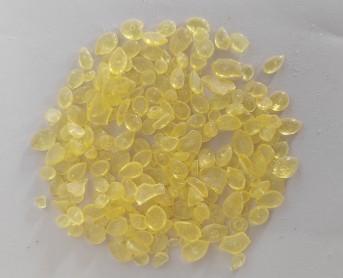
C5 petroleum resin is an aliphatic,non-polar,thermoplastic hydrocarbon resin.Its molecular structure consists primarily of saturated aliphatic hydrocarbon chains and contains virtually no polar functional groups.In accordance with the principle of"like dissolves like,"it is soluble only in various non-polar or weakly polar organic solvents;it is insoluble in water and polar alcoholic solvents such as methanol and ethanol.In industrial applications—including adhesives,coatings,inks,and rubber modification—the selection of a solvent directly impacts dissolution rate,solution stability,product odor,VOC emissions,as well as the adhesion and drying performance of the final product.This article provides a comprehensive overview of the suitable solvents for C5 petroleum resin—covering their dissolution properties,advantages and disadvantages,applicable scenarios,and selection guidelines—to serve as a valuable reference for formulation R&D,production compounding,and process optimization.
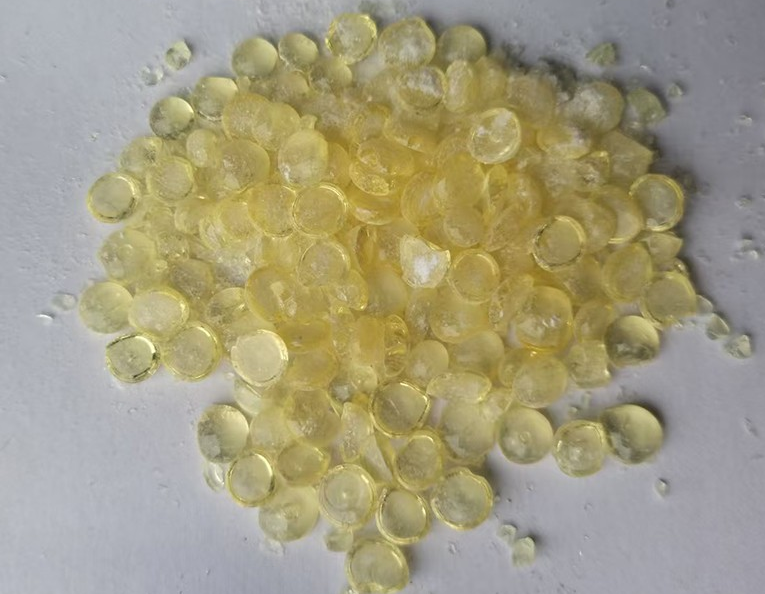
I.Aromatic Solvents(Strongest Dissolving Power;The Preferred Choice for General Industrial Use)
Aromatic solvents are the most effective and widely utilized class of solvents for dissolving C5 petroleum resin.They offer rapid dissolution rates,yield clear and stable solutions,and allow for high resin saturation levels;furthermore,complete dissolution can be achieved at room temperature without the need for auxiliary heating.The mainstream solvents in this category include toluene,xylene,and high-boiling-point aromatic solvent oils(e.g.,S100 and S150).Toluene possesses exceptional dissolving power,thoroughly dissolving both standard and high-softening-point C5 resins;it produces solutions with moderate viscosity and excellent leveling properties,making it widely used in formulations for solvent-based adhesives,road marking paints,and anti-corrosive coatings.Xylene exhibits a slower evaporation rate,lower odor,and superior system stability,making it suitable for paint and ink systems where drying speed requirements are less stringent.Aromatic solvent oils feature a broader distillation range,offering gradual evaporation and high safety levels,making them ideal for applications involving prolonged mixing and compounding,as well as for the production of high-solids-content coatings.The drawback of this class of solvents is their relatively strong odor and high VOC content;therefore,they must be selected with caution in scenarios subject to strict environmental regulations.Their advantage lies in their broad compatibility—exhibiting excellent miscibility with acrylic resins,alkyd resins,and rubber substrates—making them the standard solvent of choice in traditional industrial formulations.
II.Aliphatic Hydrocarbon Solvents(Low-Odor,Eco-Friendly Types;Mainstream Alternatives)
Aliphatic hydrocarbon solvents—including white oil,Solvent Oil No.6,Solvent Gasoline No.120,and the D-series dearomatized solvents—possess molecular structures similar to that of C5 resins.They offer excellent solvency,extremely low odor,benzene-free eco-friendliness,and low toxicity,making them the preferred alternative solvent for upgrading modern eco-friendly formulations.Solvent Oils No.6 and No.120 feature rapid evaporation rates and low cost;while their dissolution speed is slightly slower than that of toluene,they can achieve complete dissolution through stirring at room temperature.Consequently,they are widely utilized in rubber compounding,eco-friendly pressure-sensitive adhesives,sealants,and the production of light-colored products.The D-series dearomatized solvents are entirely free of aromatic hydrocarbons,exhibit low volatility,and offer excellent resistance to yellowing.They are ideally suited for use in food packaging adhesives,light-colored inks,and high-end daily-use chemical adhesives—particularly when paired with hydrogenated-grade C5 petroleum resin—resulting in significantly enhanced weather resistance and purity in the finished products.
Overall,aliphatic hydrocarbon solvents are mild in nature and non-corrosive to substrates,leaving behind minimal residue.Their primary drawback is that they dissolve high-softening-point C5 resins somewhat slowly,and slight gel precipitation may occur at low temperatures;however,these issues can be easily resolved by applying moderate heat and stirring.
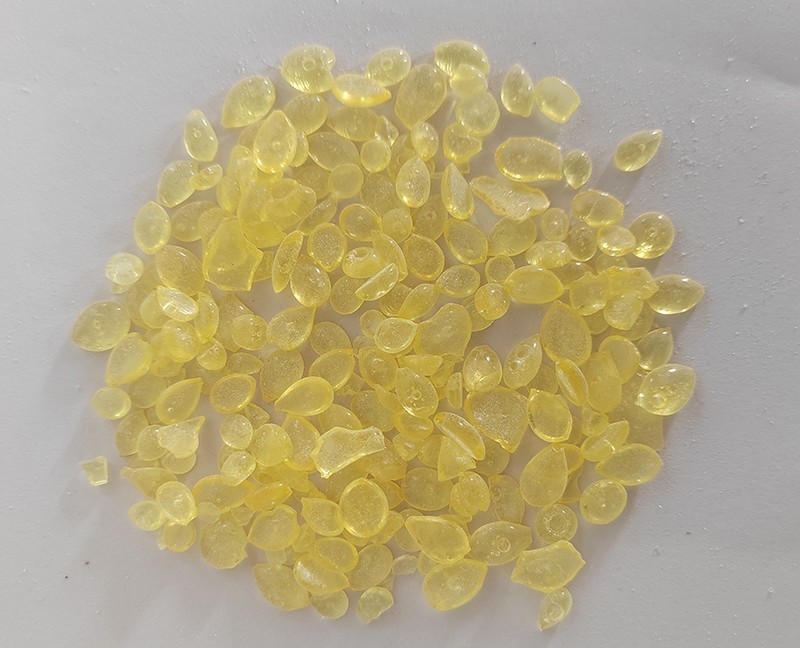
III.Ketone and Ester Solvents(Weakly Polar;Specialized for Blended Formulations)
C5 petroleum resin can be partially dissolved in weakly polar solvents such as acetone,methyl ethyl ketone(MEK),ethyl acetate,and butyl acetate.However,their solubility saturation is limited when used in isolation;therefore,these solvents are generally not employed as the sole primary solvent but are instead predominantly used as components within blended solvent systems.Ketone and ester solvents are characterized by rapid evaporation rates and quick drying times;they are frequently blended with aromatic and aliphatic hydrocarbons to regulate the overall evaporation rate,accelerate the surface drying of paint films,and enhance the leveling properties of coatings as well as the color development of inks.In composite adhesive systems,the use of such blends can optimize initial tack while simultaneously reducing the proportion of single aromatic solvents,thereby balancing effective solvency with environmental compliance requirements.Note that pure alcohols and aqueous systems are completely incapable of dissolving C5 resins;their addition is strictly prohibited.
IV.Other Compatible and Incompatible Solvents
Long-chain alkane oils—such as kerosene,diesel,and mineral oil—are capable of dissolving C5 resins,albeit slowly and with extremely low volatility;they are primarily utilized in formulations for rubber plasticization and heavy oil modification.Cyclohexane possesses excellent solvency and yields solutions with high clarity;it is frequently employed in the formulation of precision inks and in compounding experiments involving specialized resins.
Absolutely Prohibited Solvents:Polar solvents such as water,methanol,ethanol,isopropanol,and ethylene glycol.Due to the non-polar structure of C5 resins,they are incompatible with these substances;their addition will result in phase separation,precipitation,or flocculation,rendering the product completely unusable.
V.Practical Principles for Solvent Selection and Production Recommendations
1.For applications prioritizing maximum solvency,low cost,and general-purpose formulations,toluene and xylene are the preferred choices.
2.For applications requiring environmental friendliness,low odor,or benzene-free formulations,120#solvent oil and D-series dearomatized solvent oils are the primary recommendations.
3.For high-solids coatings and slow-drying processes,S100 aromatic solvent oil or high-boiling-point aliphatic hydrocarbon oils should be selected.
4.For fast-drying inks and composite adhesive systems,a blended solvent mixture comprising aromatic hydrocarbons and ketones/esters is recommended.
5.As the softening point of a C5 resin increases,the difficulty of dissolution also increases;therefore,aromatic solvents should be prioritized,accompanied by appropriate heating and agitation to enhance dissolution efficiency.Concurrently,the dissolution process adheres to a specific operational protocol:adding the solvent first,followed by the C5 petroleum resin,while maintaining low-speed agitation and gradually raising the temperature.This procedure prevents the resin from clumping or agglomerating,ensuring that the resulting solution is homogeneous and free of impurities,thereby stabilizing the core performance characteristics—such as tack,adhesion,and weather resistance—of the final product.

 Language


 Address:Linzi District,Zibo City,Shandong Province
 E-mail:wanbang@wanbangresin.com
 WhatsApp:+8615053337101