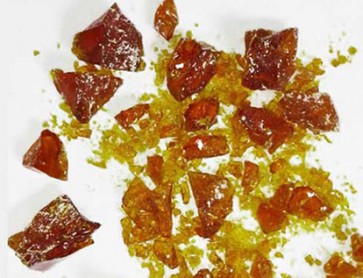
Rubber softener are a crucial category of additives in the rubber industry. Their primary functions can be summarized as: reducing compound viscosity, improving processing characteristics, aiding the dispersion of fillers and other additives, and enhancing certain physical properties of the vulcanizate.
Here is a detailed breakdown of their specific roles:
1. Core Function: Improving Processing Characteristics
This is the most fundamental and important function of softeners.
-
Reduce Mooney Viscosity: Make raw rubber and compounds softer and more easily deformable, thereby lowering processing energy consumption.
-
Increase Plasticity, Flowability, and Tack: Make compounds easier to mix on open mills and in internal mixers, and facilitate filling molds or adhering to fabric/skeleton materials during extrusion, calendering, and molding processes.
-
Promote Dispersion of Fillers and Other Additives: Act as a lubricating medium to help carbon black, silica, curing agents, etc., disperse uniformly within the rubber matrix, preventing agglomeration and improving mixing efficiency and compound uniformity.
2. Secondary Functions: Improving Product Performance
-
Adjust Hardness and Modulus of Vulcanizate: The softness/hardness of the final rubber product can be flexibly adjusted by varying the amount added.
-
Improve Elasticity and Low-Temperature Properties: Certain softeners can lower the glass transition temperature of rubber, helping products maintain flexibility in low-temperature environments.
-
Reduce Cost and Increase Volume: Some softeners (e.g., process oils, plasticizers) are less expensive than rubber itself. Adding them in appropriate amounts can reduce material costs without significantly compromising performance and can also increase product volume.
3. Other Specific Functions
-
Improve Adhesion: In rubber-to-metal or rubber-to-fabric bonding, softeners can help improve interfacial adhesion.
-
Act as a Carrier for Processing Aids: Help other minor additives (e.g., antioxidants, accelerators) disperse more uniformly.
Types and Selection of Rubber Softener
The choice of softener depends on the type of rubber and the end use of the product. They are mainly classified into the following categories:
Key Considerations in Application
-
Compatibility/Solubility: The softener must have good compatibility with the specific rubber (polar or non-polar) used. Otherwise, it may bleed out (blooming or oil bleeding), affecting appearance and performance.
-
Volatility: Softeners with low volatility are more permanent during processing and service, ensuring stable performance.
-
Extraction and Migration Resistance: For products in contact with oils or solvents, softeners resistant to extraction should be selected. For multi-layer composites, attention must be paid to whether the softener migrates to adjacent layers.
-
Effect on Curing System: Some softeners may contain impurities (e.g., basic or acidic substances) that affect cure rate, requiring formula adjustments.
-
Environmental and Health Aspects: Increasingly important. Many traditional aromatic oils are restricted due to Polycyclic Aromatic Hydrocarbons (PAHs) content. Environmentally friendly alternatives like naphthenic oils and bio-based plasticizers are becoming trends.
Rubber softener are essentially "modifiers" and "optimizers" for rubber processing and formulation design. They are akin to "oil" and "water" in cooking. While you cannot make the "dish" without the main ingredient "rubber," skillfully using different types of these "oils and waters" can greatly improve the "cooking process" (processing) and ultimately achieve the desired "texture and mouthfeel" (product performance).

 Language


 Address:Linzi District,Zibo City,Shandong Province
 E-mail:wanbang@wanbangresin.com
 WhatsApp:+8615053337101