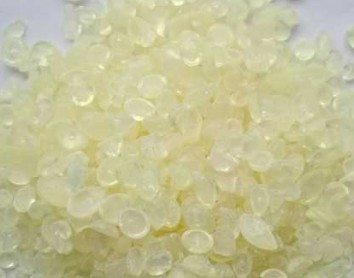
The production of
C5 hydrocarbon resin is essentially a cationic polymerization process.It involves polymerizing active olefin components in the C5 fraction(such as isoprene,piperylene,cyclopentadiene,and their derivatives)under the action of a catalyst to produce low molecular weight(typically 300-3000)thermoplastic resins.
一.Main Production Methods for C5 Hydrocarbon Resin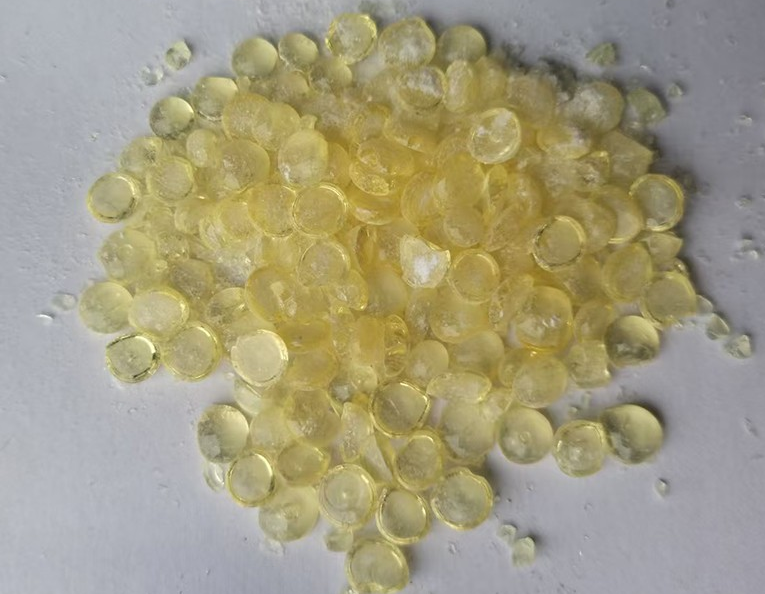
Currently,the industry primarily employs solution polymerization processes,centering on Friedel-Crafts catalysts.Based on differences in the catalyst system and post-treatment,the main methods are divided into two types:
1.Traditional"Two-Step"Process(AlCl₃Catalyst Method)
This is the earliest industrialized and once the most widely used method.
---Raw Material Pretreatment:The C5 fraction first undergoes thermal dimerization to react away highly active cyclopentadiene(CPD)or dicyclopentadiene(DCPD).This prevents gel formation or excessive cross-linking during subsequent polymerization,ensuring stable resin quality.
---Polymerization Reaction:
Catalyst:Primarily uses anhydrous aluminum trichloride(AlCl₃)or its complexes.
Process:The pretreated C5 feedstock is mixed with a solvent(such as benzene,toluene,etc.),and the catalyst solution is added dropwise at low temperatures(e.g.,-10°C to 50°C)to initiate polymerization.The reaction is highly exothermic,requiring strict temperature control.
---Post-Treatment:
Termination and Neutralization:After the reaction ends,a base(e.g.,NaOH,lime milk)or alcohols/water is added as a terminator to deactivate the catalyst.
Washing:The reaction mixture is repeatedly washed with water to remove catalyst residues and salts formed during neutralization.
Distillation:Unreacted monomers and solvents are first distilled off(for recovery),and finally the resin product is distilled under reduced pressure.
---Characteristics:
Advantages:Mature technology,high catalyst activity,fast reaction rate.
Disadvantages:Long process flow,generates large amounts of aluminum-containing wastewater,significant environmental pressure;product color is usually deep(yellow to brown),prone to containing halogen impurities.
2.Modern"One-Step"Process(Supported or Eco-Friendly Catalyst Method)
This is the current mainstream and more advanced production technology,aiming to address the environmental and product quality issues of the traditional method.
---Raw Material Treatment:Usually does not require separate thermal dimerization pretreatment;feedstock can directly enter the polymerization stage.
---Polymerization Reaction:
Catalyst:Employs new eco-friendly catalysts,such as:
Supported Catalysts:Immobilizing main catalysts like AlCl₃on porous carriers like silica or molecular sieves.
Low-Temperature Complex Catalysts:Such as BF₃complexes,R₂O-BF₃,etc.
---Ionic Liquid Catalysts.
Process:The feedstock contacts the catalyst for polymerization in the reactor.Supported catalysts are often used in fixed beds,where material passes through continuously for catalytic polymerization.
---Post-Treatment:
As the catalysts are mostly solid or easily separated from the product,post-treatment is greatly simplified.Typically,only flash evaporation and distillation are needed to separate unreacted components and obtain the resin product,eliminating the complex washing and neutralization steps.
---Characteristics:
Advantages:Short process flow,almost zero discharge of"three wastes"(waste gas,waste water,industrial residue),green and environmentally friendly;product has light color(water-white to pale yellow),high purity,superior performance;catalysts can be reused or have minimal consumption.
Disadvantages:Catalyst preparation is complex,costs are higher,and requirements for feedstock and process control are more precise.
 二.Standard Production Process Flow(Using the"One-Step"Method as an Example)
A complete C5 hydrocarbon resin production unit typically includes the following sections:
1.Raw Material Pretreatment Unit:
Fractionation:The C5 fraction is cut to separate different distillates.High-purity isoprene,piperylene,etc.,can be extracted as premium feedstock,with the remainder used as polymerization feedstock.
Impurity Removal:Removal of catalyst poisons like sulfur-,nitrogen-,and oxygen-containing compounds.
(Optional)Thermal Dimerization:Deciding whether to remove CPD/DCPD based on the product plan.
2.Polymerization Reaction Unit:
Pretreated feedstock and catalyst enter the polymerization reactor(e.g.,kettle,tubular,or fixed-bed reactor)continuously in proportion.
Cationic polymerization occurs under precisely controlled temperature,pressure,and residence time.
3.Catalyst Removal and Termination Unit:
For the"one-step"method,this step is simple,potentially just a termination vessel where a small amount of terminator is added to deactivate the catalyst.
For the traditional method,it involves a complex washing,neutralization,and sedimentation separation system.
4.Separation and Refining Unit:
Flash Column/Stripper:Removes unreacted light components(C5 monomers,etc.),which are recycled to the polymerization unit.
Solvent Recovery Column:Recovers solvent if used.
Resin Product Column:The final C5 hydrocarbon resin product is distilled in a vacuum distillation column.
5.Pelletizing and Packaging Unit:
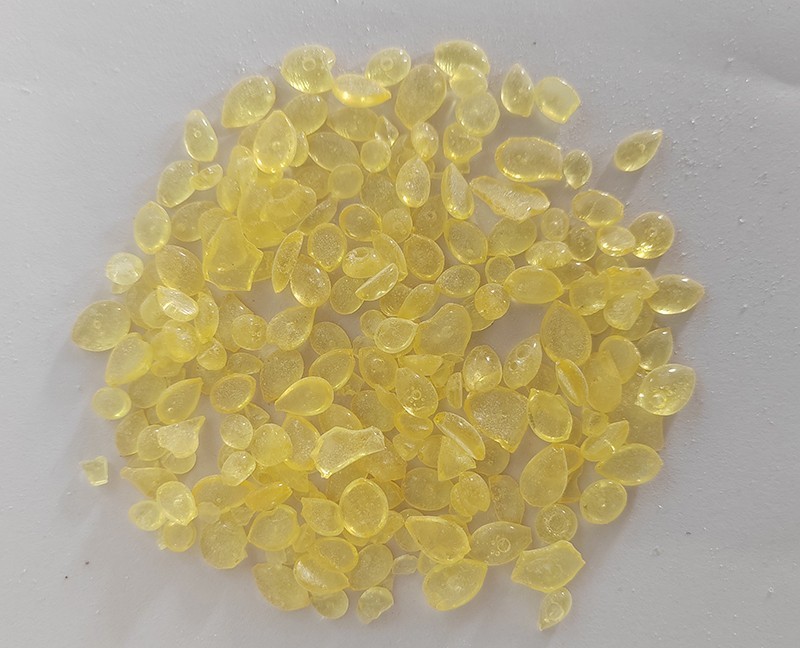
The molten resin undergoes underwater pelletizing or pastillation to form uniform pellets,facilitating storage,transportation,and use.
三.Key Factors Affecting Product Quality
Feedstock Composition:Higher piperylene content typically leads to better adhesive properties and compatibility of the resin.Fractionating and blending feedstocks is the foundation for producing different product grades.
Catalyst Type:Directly determines the polymerization mechanism,product molecular weight distribution,color,and post-treatment difficulty.
Polymerization Conditions:Temperature,catalyst concentration,monomer concentration,reaction time,etc.,collectively affect the resin's softening point,molecular weight,and molecular weight distribution.
Refining Process:The vacuum and temperature control during distillation directly impact the resin's color and thermal stability.
四.Product Applications
C5 hydrocarbon resin is widely used due to its excellent tackifying properties,heat resistance,weatherability,and good compatibility with various polymers(e.g.,SBS,EVA,natural rubber):
Adhesive Industry:Core tackifying resin for hot-melt and pressure-sensitive adhesives.
Rubber and Tire Industry:Used as a reinforcing tackifier.
Asphalt Modification:Improves the high/low-temperature performance and bonding strength of asphalt.
Inks and Coatings:Used as a thickening agent and to improve gloss.
The production technology for C5 hydrocarbon resin is evolving from the traditional AlCl₃-based"two-step"method towards more environmentally friendly and efficient supported catalyst"one-step"methods.The core lies in obtaining suitably composed C5 feedstock through fractionation and conducting controlled cationic polymerization with advanced catalyst systems,ultimately yielding products that meet diverse market demands through precise separation.

 Language


 Address:Linzi District,Zibo City,Shandong Province
 E-mail:wanbang@wanbangresin.com
 WhatsApp:+8615053337101