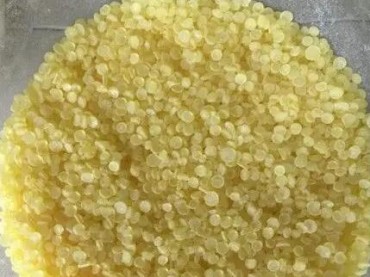
In the current era of increasingly developed transportation, road markings are like the "language" of the road, guiding vehicles and pedestrians in a safe direction. As the core material of road markings, the performance of road marking paint resin directly determines the clarity, durability, and service life of the markings. Road marking paint resin not only needs to withstand repeated vehicle crushing, exposure to sunlight, rain, and various chemical substances, but also needs to maintain long-term stability in complex and changing environments. So, how long is the service life of road marking paint resin? This is not only a concern for traffic management departments, but also a focus of attention for drivers and pedestrians. This article will systematically analyze the service life and influencing factors of different marking paint resins from three dimensions: resin type, construction technology, and environmental factors, combined with industry data and practical cases.
1. Resin type: Chemical structure determines basic lifespan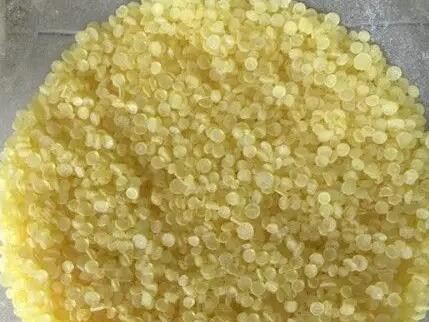
The road marking paint resin is mainly divided into three categories: hot melt type, two-component cold coating type, and epoxy resin type, and their chemical structure differences lead to significant life differentiation.
(1) Hot melt resin: Using thermoplastic resin as the base material and applying it through high-temperature melting. The service life of asphalt pavement can reach 7-8 years, but cement pavement can be shortened to 3-4 years due to differences in adhesion. Its physical drying characteristics lead to deformation at high temperatures, becoming a key factor limiting its lifespan.
(2) Two component cold coating resin: using chemical cross-linking systems such as acrylic acid and epoxy, and achieving room temperature curing through two-component mixing. This type of resin has strong adhesion to the base layer, excellent wear resistance, and a service life of 3-5 years in highway applications. However, the issue of residual monomers needs to be controlled through process optimization.
(3) Epoxy resin type: mainly composed of bisphenol A epoxy resin, formed into a three-dimensional network structure through chemical cross-linking. Under special application conditions, the lifespan can reach 5-8 years, but its low temperature curing performance (above 10 ℃) and photo aging issues limit its popularity.
2. Road surface material: substrate compatibility affects durability
(1) The compatibility between road surface material and road marking paint resin directly determines the lifespan of the marking. Experimental data shows that:
(2) Asphalt pavement: Hot melt resin marking has a lifespan of 7-8 years, while cold paint marking has a lifespan of 1-2 years. The flexibility of asphalt matches well with the thermoplasticity of hot melt resin, while the physical adhesion of cold paint is prone to failure under dynamic loads.
(3) Cement pavement: The service life of hot-melt resin markings is shortened to 3-4 years, while cold paint markings are maintained for 1-2 years. The rigid surface of cement causes stress cracks when the resin of hot-melt road marking paint cools and shrinks, while the adhesion of cold paint is worse in the pore structure of cement.
3. Environmental conditions: Multiple erosion accelerates aging
(1) Ultraviolet irradiation: Aromatic ether bonds in epoxy resin are prone to breakage under ultraviolet light, leading to coating powdering and yellowing. Experiments have shown that the markings on the sunny side fade six months earlier than those on the shaded side.
(2) Temperature fluctuations: Hot melt road marking paint resin has stable performance within the range of -20 ℃ to 60 ℃, but extreme temperature differences can cause thermal expansion and contraction, leading to coating cracking.
(3) Humidity and salt spray: The water absorption rate of epoxy resin reaches 7%, and the penetration of water molecules leads to swelling, plasticization, and a decrease in glass transition temperature. Sodium ions and chloride ions form osmotic pressure in salt spray environment, accelerating coating debonding.
4. Construction technology: Operating standards determine the final lifespan
(1) Road cleanliness: Dust and sludge residue can cause a decrease of over 30% in coating adhesion. Standardized construction requires a road cleanliness of over 90%.
(2) Coating thickness: The thickness of the hot-melt marking should be controlled between 1.0-4.5mm. If it is too thin, it is prone to wear, and if it is too thick, it is prone to cracking. The two-component marking achieves thickness superposition through multiple spraying, extending the service life by 20%.
(3) Curing conditions: Epoxy resin needs to be cured at 10 ℃ or above for 24 hours. For every 5 ℃ decrease in temperature, the curing time is doubled. Low temperature construction leads to insufficient cross-linking density and a 40% reduction in lifespan.
The service life of road marking paint resin is influenced by various factors, including the quality of the resin itself, construction technology, road usage environment, and maintenance situation. Generally speaking, high-quality road marking paint resin can have a service life of several years under good construction and usage conditions. However, in actual use, due to various complex factors, its lifespan may fluctuate. In order to extend the service life of road marking paint resin, relevant departments should strictly control the quality of resin, standardize the construction process, and carry out reasonable maintenance according to the actual situation of the road. Only in this way can we ensure that road markings are always clear and visible, providing reliable safety guarantees for people's travel and making road traffic more orderly and smooth.

 Language


 Address:Linzi District,Zibo City,Shandong Province
 E-mail:wanbang@wanbangresin.com
 WhatsApp:+8615053337101