C5 hydrogenated petroleum resin features light color,low odor,outstanding weather resistance and water resistance,so it is widely applied in inks,adhesives,coatings,rubber and plastic modification.However,many manufacturers frequently encounter defects such as gloss loss,system delamination,poor adhesion,yellowing and precipitation during actual production.Most of these problems are not caused by product quality defects,but improper operations in model selection,formula compatibility,processing technology,storage and usage.Below we sort out common error causes and corresponding solutions:
I.Mismatched Resin Model Selection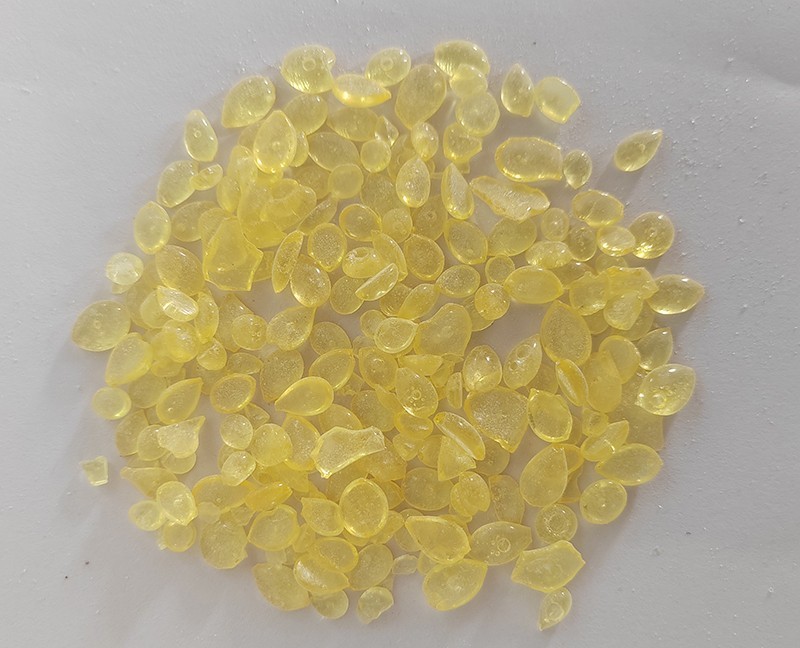
C5 hydrogenated petroleum resins with different softening points and hydrogenation saturation vary greatly in performance.Blind purchase of general-purpose models will easily lead to poor matching results.
1.Wrong softening point selection:Using low softening point resin for hot-melt adhesives will result in soft colloid at high temperature and insufficient holding power;adopting high softening point products for outdoor weather-resistant coatings and packaging inks will cause sharp viscosity rise,poor leveling,pinholes due to excessively fast drying.
2.Mismatched hydrogenation saturation:Ordinary hydrogenated grades will cause slight yellowing when used for food-contact and light-colored transparent products;blindly purchasing high-saturation refined grades for ordinary industrial primers will greatly increase raw material costs without bringing performance improvements.
3.Ignored substrate adaptability:Using high-polarity C5 hydrogenated petroleum resin in non-polar plastic systems such as PP and PE leads to poor compatibility,followed by whitened paint films and peeled adhesive layers in the later stage.
II.Unreasonable Formula Compatibility
1.Imbalanced proportion with other resins
Excessive addition of rosin,terpene,ordinary cold/thermal polymerized petroleum resins will offset the weather resistance and anti-yellowing advantages of C5 hydrogenated petroleum resin,and the system is prone to delamination and precipitation.
2.Conflicting auxiliary agents
Some acidic and strongly polar defoamers and dispersants will break the stable system of C5 hydrogenated petroleum resin,easily triggering pigment flocculation and floating color in inks;excessive plasticizers in hot-melt adhesives will weaken the tackifying effect of resins and greatly reduce initial adhesion.
3.Incompatible solvent systems
High-saturation C5 hydrogenated petroleum resin has a limited dissolution range.Single use of weak alkane solvents leads to incomplete resin dissolution,finished products with poor gloss and rough surface feel.
III.Improper Production and Processing Technology
1.Inadequate control of melting and dissolving temperature
Too low temperature:Incomplete resin melting with residual particles,forming lumps inside adhesives and inks;
Too high temperature:Long-time high-temperature baking causes slight oxidation of hydrogenated resins,resulting in yellow finished products,aggravated odor and degraded weather resistance.
2.Wrong feeding sequence
Adding fillers and pigments before C5 hydrogenated petroleum resin prevents the resin from fully wrapping powders,leading to poor dispersion and simultaneous decline in wear resistance and adhesion.
3.Insufficient stirring and mixing time
Low stirring speed and inadequate mixing duration on small production lines prevent uniform dispersion of resin in the whole system,resulting in unstable batch color difference and product performance.
IV.Improper Raw Material Storage
1.Substandard storage environment
Long-term storage in high-temperature sun-exposed warehouses and broken seals with exposure to air and moisture advance resin oxidation.After feeding into production,it directly brings poor water resistance and paint film gloss loss;excessive warehouse humidity makes resin absorb moisture and generate bubbles during hot-melt processing.
2.Mixed use of new and old resins
Mixing expired and long-opened oxidized resin with brand-new C5 hydrogenated petroleum resin causes inconsistent performance of old and new materials,triggering adhesion failure and precipitation of finished products.
V.Solutions to Make Full Use of C5 hydrogenated petroleum resin Efficiently
1.Accurate model selection:Confirm resins with corresponding softening points and hydrogenation grades according to printing/adhesion substrates,application scenarios(outdoor/food/indoor)and processes(solvent-based/hot-melt),and conduct small trials with samples in advance.
2.Optimize formula ratio:Take C5 hydrogenated petroleum resin as the main tackifying and film-forming component,control the dosage of other resins and additives,and match composite aromatic and ester solvents to ensure complete dissolution.
3.Standardize production technology:Process at the resin’s recommended melting temperature,follow the sequence of"dissolve resin first,then add pigments and fillers",and ensure sufficient stirring and mixing.
4.Standard warehouse management:Hermetically store in cool and ventilated warehouses away from heat sources and oxidants;use up opened materials within a short period,and prohibit random mixing of new and old resins.
5.Small trial in advance:Conduct 500g small trials for each new batch of raw materials before mass production to test indicators including gloss,adhesion,water resistance and yellowing resistance,and start mass production only after passing inspection.
In short,unsatisfactory application effects of C5 hydrogenated petroleum resin are mostly derived from inadequate control over model selection,formulas,processing techniques and storage details.Select models matching your own production line and product positioning,standardize formulas and processing flows,so as to give full play to its core advantages of low VOC,high weather resistance and high compatibility and avoid defective products.

 Language


 Address:Linzi District,Zibo City,Shandong Province
 E-mail:wanbang@wanbangresin.com
 WhatsApp:+8615053337101