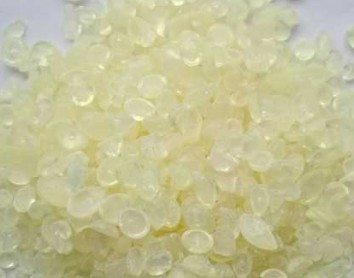
In industrial fields such as adhesives,rubber products,and ink coatings,C5 hydrocarbon resin and terpene resin,as core tackifying resins,occupy an important position with their unique performance advantages.Many production enterprises often face the confusion of"which one is better"when selecting materials—in fact,there is no absolute advantage or disadvantage,only the difference in whether they are suitable for the scenario.This article will conduct a comprehensive comparison from dimensions such as performance characteristics,application scenarios,cost control,and environmental requirements to help industry practitioners make accurate selections.
I.Comparison of Core Performance Characteristics
The performance differences between C5 hydrocarbon resin and terpene resin stem from the essential differences in raw materials and production processes,which also determine the application boundaries of the two.
1.Raw Materials and Process Basis
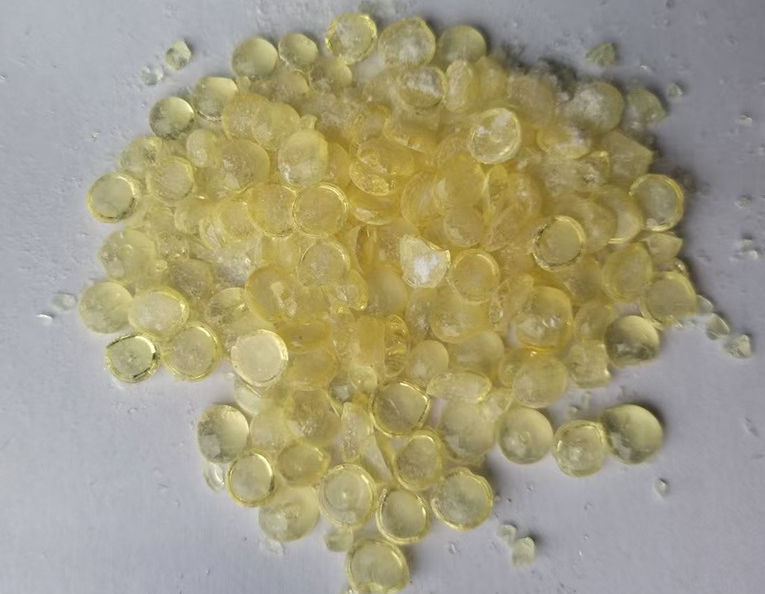
C5 hydrocarbon resin,also known as C5 petroleum resin,is a thermoplastic resin made from C5 fractions,by-products of petroleum cracking,through processes such as cationic polymerization and distillation to remove low boilers.Its molecular weight ranges from 300 to 3000,belonging to aliphatic oligomers.According to whether it undergoes hydrogenation modification,it can be divided into ordinary C5 hydrocarbon resin and hydrogenated C5 hydrocarbon resin(C5+H).The latter saturates double bonds through high-temperature and high-pressure hydrogenation process,resulting in a more stable molecular structure.
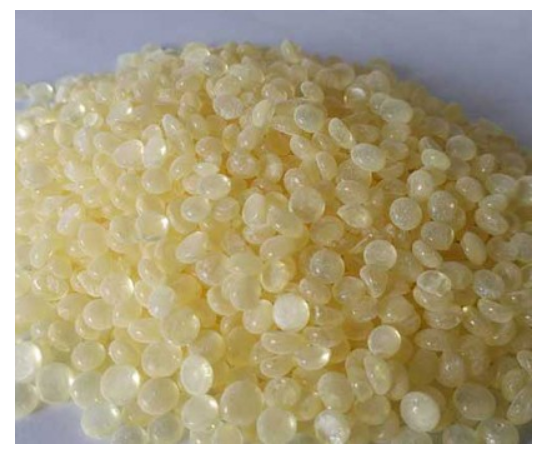
Terpene resin is made fromα-pinene andβ-pinene in natural turpentine as core raw materials through Lewis acid-catalyzed polymerization and water washing to remove solvents.It is a naturally modified resin.According to the process,it can be divided into three categories:α-terpene resin,β-terpene resin,and terpene phenol resin,with the low-toxicity and environmental protection characteristics of natural materials.
2.Key Performance Differences
Color and Aging Resistance:Ordinary C5 hydrocarbon resin is prone to oxidation and yellowing under long-term exposure to sunlight or high-temperature environments due to residual double bonds,and is only suitable for dark-colored products;hydrogenated C5 hydrocarbon resin can achieve water-white transparency,with significantly improved weather resistance,and can maintain color stability after 6 months of exposure to sunlight.Terpene resin is naturally light-colored(the chroma of premium products is≤6 by iron-cobalt method),with better light resistance and oxidation resistance than ordinary C5 hydrocarbon resin,and its aging resistance is improved by about 50%,making it suitable for light-colored and outdoor products.
Compatibility and Adhesion:Both have good compatibility with elastomers such as EVA,SIS,and SBS,but are suitable for different scenarios.C5 hydrocarbon resin has high peel adhesion strength,good initial tack,moderate melt viscosity,and excellent compatibility with synthetic rubber.Adding 5-10 parts can improve the processing fluidity of rubber compounds.Terpene resin is characterized by high adhesion and cohesion,which can increase the initial tack by 30%in pressure-sensitive adhesives,and has outstanding creep resistance,making it suitable for scenarios requiring high bonding durability.
Heat Resistance and Stability:Terpene resin has better heat resistance,which does not decompose at 240℃,with a thermal degradation activation energy of 127.37 kJ/mol,suitable for products under high-temperature working conditions;hydrogenated C5 hydrocarbon resin is the next,which can withstand a working temperature of 80-120℃,while ordinary C5 hydrocarbon resin has weak heat resistance.In terms of acid and alkali resistance,both perform well,but terpene resin is hydrophobic and non-crystalline,with better stability in humid environments.
II.Suggestions for Adaptation to Subdivided Application Scenarios
Combined with performance differences,the applications of the two in various industries show obvious scenario differentiation,and precise matching of needs can maximize their value.
1.Adhesive Field
In hot-melt adhesives(EVA/SIS/SBS systems),C5 hydrocarbon resin has a prominent cost performance.The ordinary type is suitable for low-cost packaging hot-melt adhesives and ordinary tapes,while the hydrogenated type can be used in mid-to-high-end products such as automotive door and window seals,balancing adhesion and weather resistance.Terpene resin is more suitable for high-end adhesives,such as double-sided tapes and solvent-based adhesives.Adding 20-45%can improve weather resistance and solve water seepage problems.Terpene phenol resin can also be used in food-grade sealants,complying with the LY/T 1453-2010 safety standard.
For the bonding of non-polar substrates(PE,PP),both are preferred,but the initial tack of C5 hydrocarbon resin is more suitable for high-speed coating processes;when bonding polar substrates(wood,PVC),the reinforcing effect of terpene-phenolic resin is more obvious,which can improve holding power.
2.Rubber and Plastic Products
C5 hydrocarbon resin is a commonly used tackifying additive for rubber products.The ordinary type is suitable for low-cost dark-colored products such as inner rubber of black tires and dark gaskets,which can improve the wrapping performance of rubber compounds and avoid sticking to equipment;hydrogenated C5 hydrocarbon resin is used in high-end products such as white medical hoses and high-speed rail shock absorbers,with no precipitation even when the addition amount reaches 30 parts.Terpene resin can enhance the cohesion of rubber,perform excellently in creep-resistant products such as automotive gaskets,and its non-toxic characteristic is suitable for the production of toy rubber parts.
In terms of plastic modification,C5 hydrocarbon resin can be used as a modification additive for OPP films and polypropylene to improve processing performance;terpene resin is more easily dispersed in polyolefin new materials,which can optimize the surface adhesion of products.
3.Ink and Coating Field
C5 hydrocarbon resin can improve the fluidity and wettability of inks,suitable for ordinary printing inks and waterproof material additives,with better tackifying effect than C9 resin,but its weather resistance limits its application in outdoor coatings.Terpene resin can improve pigment dispersion and has strong oxidation resistance,which can extend the service life in outdoor coatings and high-end inks.β-terpene resin's UV resistance is particularly suitable for solvent-based inks.
III.Considerations in Cost and Environmental Protection
1.Cost Differences and Adaptation Strategies
The raw material of C5 hydrocarbon resin is a by-product of petroleum,with a simple production process(only three core processes),resulting in a significant cost advantage.The price of ordinary C5 hydrocarbon resin is 10-20%lower than that of terpene resin;hydrogenated C5 hydrocarbon resin is 15-25%more expensive than ordinary C5 hydrocarbon resin due to the increased cost of hydrogenation equipment and catalysts,but it is still lower than high-end terpene resin.The price of terpene resin is greatly affected by the price fluctuation of turpentine raw materials,and the processing cost of natural raw materials is high,so it only has a cost performance advantage in high-end scenarios.
For mass production sensitive to cost and without requirements for light color and weather resistance(such as black rubber products),ordinary C5 hydrocarbon resin is the best choice;when pursuing high-end performance with sufficient budget,terpene resin or hydrogenated C5 hydrocarbon resin can be selected.
2.Environmental Protection and Safety Requirements
Terpene resin is derived from natural turpentine,non-toxic and odorless,complying with environmental standards for food packaging,medical products,etc.,and its demand continues to grow under the trend of green production.C5 hydrocarbon resin itself is non-toxic,but the ordinary type may retain a small amount of solvent odor.Hydrogenated C5 hydrocarbon resin has a lower odor after refining,which can meet most industrial environmental protection requirements,and is only slightly inferior to terpene resin in high-end food-grade scenarios.
IV.Selection Summary:Make Trade-offs Based on Needs and Achieve Precise Matching
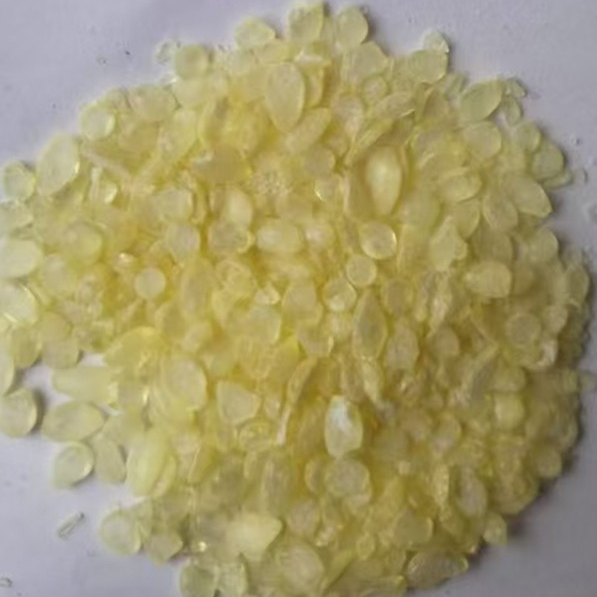
In summary,whether C5 hydrocarbon resin or terpene resin is"better"depends on the performance requirements,cost budget,and environmental standards of the application scenario:
Choosing C5 hydrocarbon resin is more suitable for low-cost,dark-colored products,and ordinary working condition scenarios,such as black tires,ordinary hot-melt adhesives,and industrial gaskets.Especially hydrogenated C5 hydrocarbon resin can balance mid-to-high-end weather resistance requirements,with prominent cost performance.
Choosing terpene resin is preferred for high-end scenarios,such as light-colored/outdoor products,food-grade sealants,and high-end inks and coatings.Its natural environmental protection,high weather resistance,and strong adhesion can solve the performance pain points of high-end products.
In actual production,the performance can also be optimized by compounding the two,such as using C5 hydrocarbon resin to control costs and adding a small amount of terpene resin to improve weather resistance,achieving a balance between performance and cost.The final selection must be combined with specific product indicators,working conditions,and budgets to maximize the material value.

 Language


 Address:Linzi District,Zibo City,Shandong Province
 E-mail:wanbang@wanbangresin.com
 WhatsApp:+8615053337101