 Language


More Language
Language
Thickening resin are a vital class of high-molecular-weight compounds whose core function is to achieve specific applications by altering the rheological properties of a system (primarily by increasing viscosity). Below is a detailed explanation from the perspectives of uses and principles.
Thickening resin are widely used in fields that require control over liquid flow and stability, mainly categorized into the following areas:
Paints and Inks Industry (The most significant application area)
Preventing Sagging: Prevents paint from running down vertical surfaces during application, ensuring an even coating.
Controlling Leveling: Balances the flow and setting of the paint, avoiding defects like brush marks or orange peel.
Preventing Pigment Settling: Increases system viscosity, suspending pigment particles to maintain color uniformity and stability.
Printability: Imparts specific viscosity and thixotropy to inks, ensuring print clarity and transfer properties.
Adhesives and Sealants
Thickening and Anti-Sag: Keeps adhesives in place after application, preventing undesired flow.
Improving Initial Tack: Increases the body of paste or mastic adhesives, improving application properties.
Personal Care and Household Products
Adjusting Viscosity and Texture: Used in toothpaste, shampoo, body wash, hand cream, lotions, etc., to provide the desired consistency and stability, enhancing user experience.
Suspending Particles: Suspends abrasive particles in scrubs or fluoride and abrasives in toothpaste.
Food Industry
As Food Thickeners: Natural or modified resins like pectin or modified starch are used in sauces, yogurt, ice cream, etc., to improve texture, mouthfeel, and maintain system stability.
Textile Printing and Papermaking
Printing Paste: Acts as a thickener in textile printing, fixing dyes/pigments within the pattern area and preventing bleeding.
Paper Coating: Increases the viscosity of coating liquids, controlling coating weight and smoothness.
Oilfield Chemistry
Drilling Fluid Thickening: Adjusts the rheology of drilling fluids to carry cuttings and stabilize the wellbore.
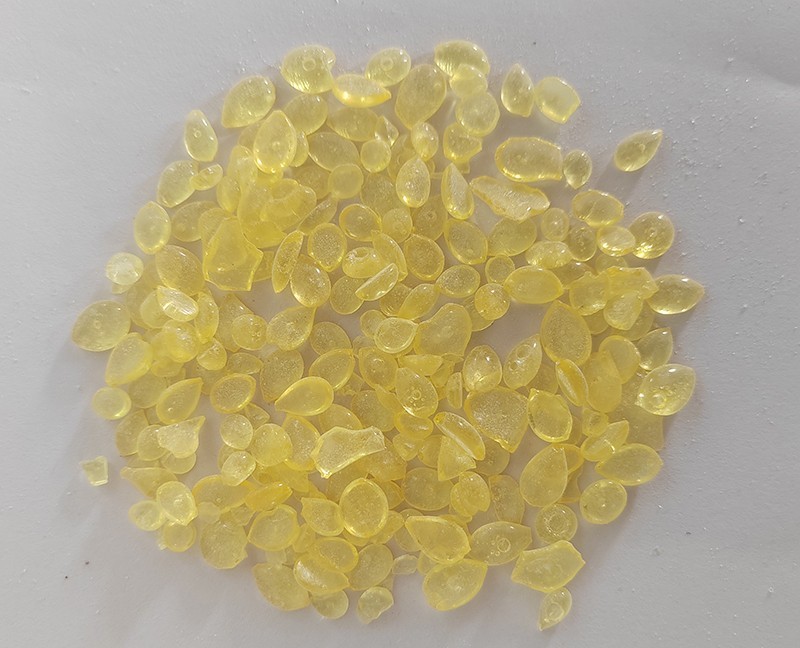
Thickening resin work by interacting with the medium through their molecular structure to form a three-dimensional network that restricts liquid flow and increases viscosity. The principles are mainly based on the following mechanisms:
Hydration and Swelling Mechanism (Applicable to aqueous systems)
Principle: Resin molecules contain hydrophilic groups (e.g., carboxyl, hydroxyl, ether linkages) that hydrate and expand in water, significantly increasing their volume. Viscosity increases through chain entanglement and space occupation.
Typical Resins: Cellulose ethers (HEC, MC), Polyacrylic acids (Alkali-Swellable Emulsions, ASE), Polyvinylpyrrolidone (PVP).
Associative Thickening Mechanism (Efficient with superior rheological properties)
Principle: Resin molecular chains carry hydrophobic groups (e.g., long-chain alkyl). These groups act like "micro-crosslinking points" in water, forming a reversible three-dimensional network through intermolecular hydrophobic association. This network is shear-sensitive (shear-thinning), recovering when at rest, giving the system good leveling and anti-sag properties.
Typical Resins: Hydrophobically Modified Hydroxyethyl Cellulose (HMHEC), Hydrophobically Modified Ethoxylated Urethane Resin (HEUR).
Alkali-Swellable Thickening Mechanism
Principle: The resin itself is acidic (e.g., cross-linked polyacrylic acid polymer) and exists in a coiled state in water. When alkali (e.g., ammonia, NaOH) is added for neutralization, carboxyl groups ionize, generating negative charges. The molecular chains extend and swell due to electrostatic repulsion, causing significant thickening.
Typical Resins: Alkali-Swellable Emulsions (ASE) and Hydrophobically Modified Alkali-Swellable Emulsions (HASE).
Inorganic Thickening/Thixotropic Mechanism
Principle: Some layered or platelet inorganic materials (e.g., bentonite, fumed silica) can form a "house-of-cards" type 3D network via hydrogen bonding or electrostatic interactions in a liquid, providing strong thixotropy (gels at rest, flows under shear).
Note: Strictly speaking, these are not "resins" but are often used in combination with organic thickening resin.
Synergistic Thickening
In practical formulations, thickening resin with different mechanisms are often combined to simultaneously meet requirements for high-shear viscosity (leveling), low-shear viscosity (anti-sag), and application feel.
| Thickening Resin Type | Typical Examples | Primary Thickening Mechanism | Key Characteristics & Application Focus |
|---|---|---|---|
| Cellulose Ethers | HEC, MC | Hydration & Chain Entanglement | High thickening efficiency, average leveling, good water retention |
| Hydrophobically Modified Types | HMHEC, HEUR | Hydrophobic Association (Reversible Network) | Excellent rheology, low viscosity at high shear (good for leveling), good anti-sag, used in high-end paints |
| Alkali-Swellable Types | ASE, HASE | Swelling after Neutralization via Electrostatic Repulsion | Cost-effective, high thickening power, commonly used in water-based architectural paints |
| Polyacrylic Acid Types | Carbomer | Hydration & Hydrogen Bond Network | Commonly used in personal care, requires neutralization to activate |
| Inorganic Types | Bentonite, Fumed Silica | Interparticle Hydrogen Bond Network | Strong thixotropy, anti-settling, often used as auxiliary thickeners |
Purpose Essence: To regulate viscosity, stabilize the system, and optimize application and performance.
Principle Core: To build a reversible, dynamic three-dimensional network within the system through physical interactions (non-chemical reactions), thereby immobilizing the liquid medium.
Selection Key: Choose the appropriate thickening resin or a combination based on system polarity (aqueous/solvent), pH, ionic strength, specific rheological curve requirements, and cost.
I hope this detailed explanation provides a comprehensive understanding of the uses and principles of thickening resin.
 Address:Linzi District,Zibo City,Shandong Province
 E-mail:wanbang@wanbangresin.com
 WhatsApp:+8615053337101
China C5 hydrogenated petroleum resin supplier : Shangdong Wanbang New Materials Co., Ltd.
C5 hydrocarbon resin manufacturer has a wide range of applications, high quality, low price, and multiple uses.Welcome to consult.