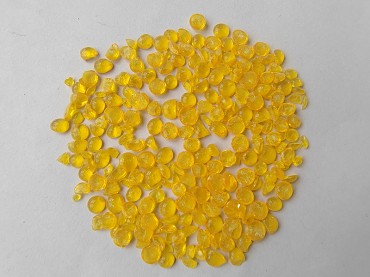
With the increasing global attention to sustainable development and environmental protection, the "white pollution" and carbon footprint issues caused by traditional petroleum based synthetic resins are becoming more prominent. Therefore, the research and manufacturing of environmentally friendly resins has become an important direction for the development of materials science and chemical industry. Environmentally friendly resins are not a single product category, but a broad concept whose core lies in significantly lower environmental impact throughout the entire lifecycle (from raw material acquisition to final degradation) compared to traditional resins. The manufacturing of environmentally friendly resins mainly revolves around three core strategies: using renewable biobased raw materials, developing degradable molecular structures, and optimizing production processes to reduce energy consumption and emissions.
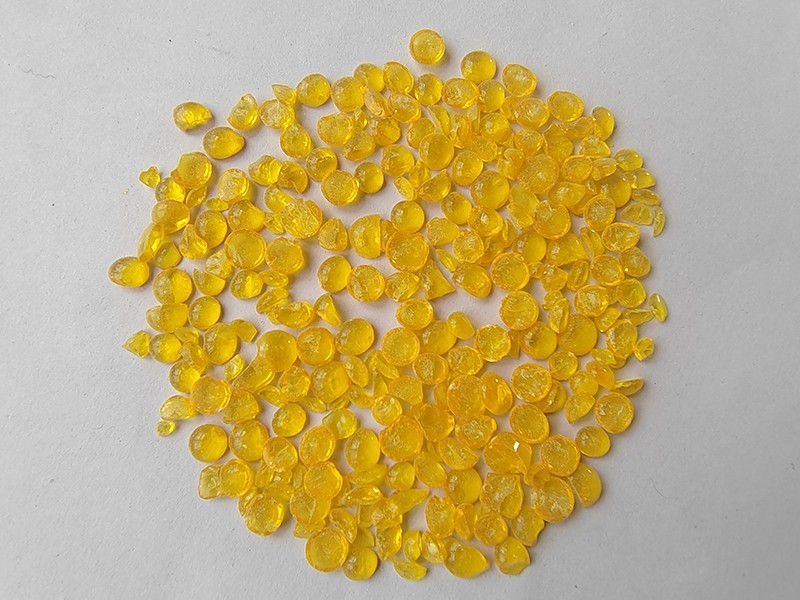
1. Core definition and manufacturing principles of environmentally friendly resins
Before exploring specific manufacturing methods, it is necessary to clarify the evaluation criteria for environmentally friendly resins. Its "environmental" characteristics are mainly reflected in the following aspects:
1. Raw material renewability: Abandoning or reducing reliance on non renewable fossil fuels such as oil and natural gas, and shifting towards using bio based raw materials sourced from plants, crops, forestry waste, and even carbon dioxide. This can not only reduce carbon emissions, but also promote carbon cycling.
2. Degradability: After the end of its service life, resin products can be decomposed by microorganisms into water, carbon dioxide (or methane), and biomass under specific environmental conditions (such as composting, soil, water bodies), avoiding long-term pollution caused by their presence in the environment.
3. Cleanliness of production process: Manufacturing processes should pursue low energy consumption, low volatile organic compound (VOC) emissions, minimal wastewater and waste residue, and use green catalysts to reduce immediate negative impacts on the environment.
4. Biocompatibility and low toxicity: Especially for applications that may come into contact with food or humans, resin monomers and additives should have low toxicity or non toxicity characteristics.
Therefore, manufacturing environmentally friendly resins is a systematic project that requires a comprehensive consideration from the molecular design source to the end treatment.
2. Main technical paths and raw material selection
At present, there are several mainstream technological paths for manufacturing environmentally friendly resins, including the following:
1. Biobased resin
This is currently the most active research and application field. The key lies in extracting suitable monomers from biomass and preparing products with properties comparable to petroleum based resins through chemical synthesis or modification.
(1) Polylactic acid (PLA) resin: This is the most representative bio based biodegradable and environmentally friendly resin. The manufacturing process is divided into two steps:
(2) Preparation of Lactic Acid Monomers: Using crops rich in starch or sugar such as corn, cassava, and sugarcane as raw materials, sugar is converted into lactic acid through microbial fermentation technology.
(3) Condensation reaction: Direct condensation or ring opening polymerization of purified lactic acid monomers. More commonly, lactide (a cyclic dimer of lactic acid) is first produced, and then ring opening polymerization is carried out under the action of a catalyst to obtain high molecular weight polylactic acid. The carbon source for the entire process comes from carbon dioxide in the atmosphere (fixed through plant photosynthesis), therefore it has the potential for carbon neutrality.
(4) Epoxy soybean oil (ESO) based resin: There is controversy over the environmental hormones of bisphenol A (BPA) monomers in traditional epoxy resins. Using vegetable oils such as soybean oil as raw materials, epoxidized soybean oil is generated through epoxidation reaction, and then used as a reactive diluent or crosslinked with anhydride curing agents to partially or completely replace petroleum based epoxy resin, and prepare environmentally friendly resin coatings and composite materials. Its advantages lie in the wide range of raw material sources, renewability, and low toxicity.
(5) Furan based resin: This is an emerging high-performance bio based environmentally friendly resin. The monomers furfural and furfuryl alcohol can be dehydrated from pentose extracted from crop waste such as corn cobs and sugarcane bagasse. Through polymerization reaction, furan resin with structures similar to phenolic resin or polyester can be generated, which has excellent heat resistance and mechanical properties, and has broad prospects.
2. Degradable synthetic resin
In addition to bio based resins, making traditional synthetic structures biodegradable through molecular design is also an important pathway.
(1) Polyadipic acid/polybutylene terephthalate (PBAT): This is a petroleum based copolymer ester, but its molecular chain introduces easily hydrolyzed ester bonds and fatty segments, allowing it to break down and decompose under microbial action, reaching the standard of compostable degradation. PBAT is often blended with PLA to improve its brittleness and is an important material for manufacturing environmentally friendly resin film bags.
(2) Polyhydroxyalkanoates (PHA): This is a type of natural polyester synthesized directly by microorganisms. By feeding specific bacterial strains (such as true alkali producing bacteria) with carbon sources such as sugars and oils, PHA accumulates inside the bacterial cells as an energy storage substance, which can be obtained through extraction and purification. The outstanding advantages of PHA are excellent biocompatibility and a wide range of degradation conditions (soil, seawater, compost, etc.), making it a truly "fully biodegradable" environmentally friendly resin.
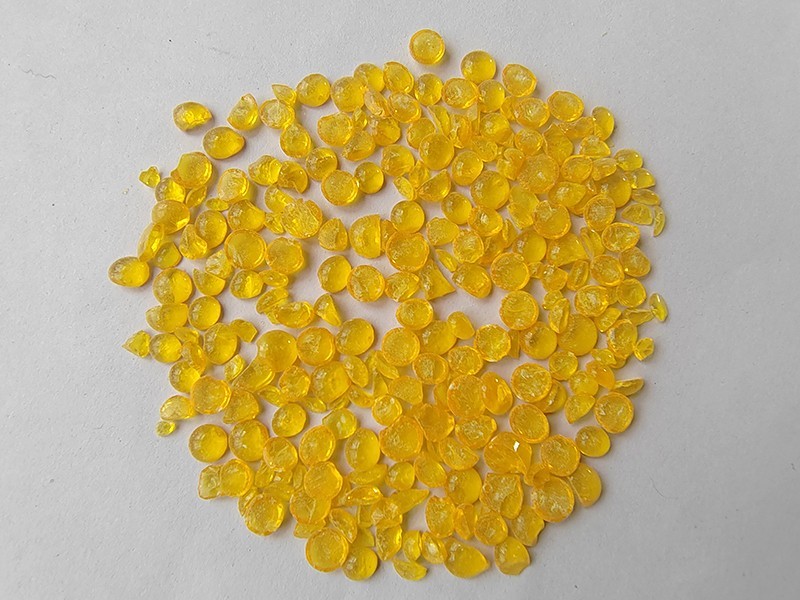
3. Key links in manufacturing process and green optimization
Even if environmentally friendly raw materials are used, the greening of the manufacturing process is equally crucial.
1. Application of green catalytic system
Many polymerization reactions require catalysts to proceed efficiently. Traditional catalysts may contain heavy metals or toxic substances. In the production of environmentally friendly resins, priority should be given to:
(1) Biological enzyme catalysts: For example, lipase can be used to catalyze esterification reactions to synthesize polyesters, with mild conditions, strong specificity, and non-toxic and harmless properties.
(2) Environmentally friendly metal catalysts: Use low toxicity or non-toxic metal compounds such as zinc, calcium, magnesium, etc. to replace heavy metal catalysts such as tin and lead.
(3) Catalyst free design: Explore the use of molecular structure design to achieve thermally or photo initiated polymerization, fundamentally avoiding the use of catalysts.
2. Energy saving and consumption reducing in processing and forming technology
(1) Low temperature processing: Developing a new environmentally friendly resin formula that can be melted and processed at lower temperatures, which can significantly reduce energy consumption. For example, toughening and modifying PLA to make its processing window wider without the need for excessively high processing temperatures.
(2) Waterborne technology: For resin coatings and adhesives, changing the solvent based system to a water-based system and replacing organic solvents with water can completely solve the problem of VOC emissions, which is a key technology for manufacturing environmentally friendly resin coatings.
(3) Additive Manufacturing (3D Printing): 3D printing technology is a form of "subtractive manufacturing" that produces almost no material waste. Developing environmentally friendly resin wires (such as PLA, PHA) or photosensitive resins suitable for 3D printing is itself a resource-saving and green manufacturing method.
3. Blending and Composite Modification
Single environmentally friendly resins often have shortcomings in certain properties, such as PLA brittleness and poor PHA processability. By blending with other biodegradable polymers such as PCL and starch, or adding natural fibers (wood fibers, bamboo fibers) and inorganic nano fillers (nanocellulose, montmorillonite) for composite, a new type of environmentally friendly resin composite material with excellent comprehensive performance can be prepared. This process itself is also part of manufacturing technology, aimed at maximizing the performance and applicability of materials and reducing losses during use.
4. Challenges and Future Prospects
Despite the rapid development of environmentally friendly resins, they still face some challenges: the cost is generally higher than traditional resins; The long-term durability and heat resistance of certain bio based resins need to be improved; The degradation conditions of biodegradable resins need to be clearly labeled to avoid misleading consumers; The infrastructure for recycling and degradation is not yet perfect.
In the future, the manufacturing technology of environmentally friendly resins will develop in the following directions:
1. Diversification of raw materials: More use of non grain biomass (such as straw, algae) and industrial waste gas (such as CO ₂) as raw materials to avoid land disputes with grain.
2. Molecular precision design: Through computer-aided design, create new molecular structures that combine excellent performance, fast and controllable degradation ability, and low cost.
3. Process integration and intelligence: Integrating biological fermentation, chemical synthesis, modified processing and other processes to achieve continuous and automated production, further improving energy efficiency and product consistency.
In summary, manufacturing environmentally friendly resins is a comprehensive technology that integrates biotechnology, polymer chemistry, materials engineering, and green processes. Its core lies in taking a full lifecycle perspective, selecting renewable/biodegradable raw materials, and supplementing them with clean production processes, ultimately achieving harmonious coexistence between materials and the environment. With the continuous breakthroughs in technology and the emergence of economies of scale, environmentally friendly resins will inevitably become a key material to replace traditional plastics and build a circular economy.

 Language


 Address:Linzi District,Zibo City,Shandong Province
 E-mail:wanbang@wanbangresin.com
 WhatsApp:+8615053337101