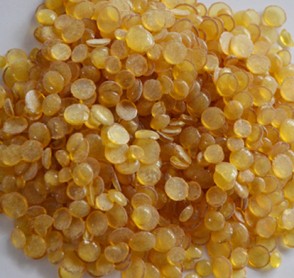
In the printing and packaging industry, ink serves as a key medium for transmitting colors and images, and its performance directly affects the quality and effect of printed materials. As the core component of ink, ink-specific resin plays a decisive role in the stability, dryness, adhesion, and glossiness of ink. Recently, with the continuous advancement of printing technology and the increasing demand for printing quality, ink-specific resins have once again become the focus of industry attention. Let's take a closer look at what ink-specific resin is.
1. Definition and Function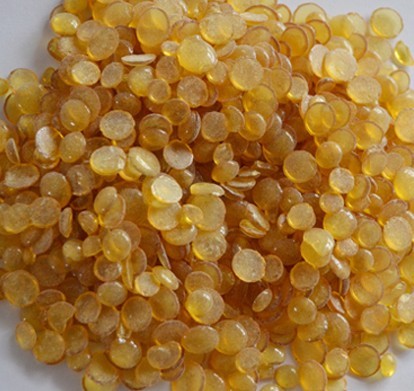
1. Pigment carrier: Ink-specific resin serves as a carrier for pigments, which can evenly disperse and encapsulate pigment particles, ensuring the stable existence of pigments in the ink system and ensuring the uniformity and stability of ink color.
2. Performance regulator: It can adjust key performance indicators such as viscosity, dryness, and flowability of ink to meet different printing processes and substrate requirements. For example, in gravure printing, ink needs to have low viscosity and good fluidity in order to smoothly fill the grooves of the printing plate and transfer to the substrate; In offset printing, ink needs to have a certain viscosity and drying speed to ensure printing quality and efficiency.
3. Adhesive: The resin forms a thin film during the ink drying process, firmly attaching the pigment to the surface of the substrate, providing adhesion between the ink and the substrate, ensuring the durability and clarity of the printed pattern.
2. Types and characteristics
1. Acrylic resin: It has good light resistance, weather resistance, and chemical resistance, with bright and long-lasting colors, and can maintain the color and luster of ink for a long time. It has good adhesion to various substrates and is suitable for outdoor advertising, packaging printing and other fields.
2. Polyurethane resin: It has excellent wear resistance, oil resistance, and solvent resistance, strong adhesion, and high glossiness. The thin film formed by it is soft and elastic, able to adapt to the deformation of the substrate, and is suitable for some printing occasions that require high wear resistance and chemical resistance, such as plastic film printing, metal printing, etc.
3. Phenolic resin: It has high hardness and heat resistance, fast drying speed, and good adhesion. But its color is darker, which may affect the transparency and color performance of the ink. It is mainly used in ink formulations that require high heat resistance and hardness, such as rotary printing ink.
4. Alkyd resin: Good gloss, moderate dryness, good wetting and dispersing effect on pigments, compatible with various resins and solvents. Its price is relatively low and it is widely used in some cost sensitive ink products, such as ordinary packaging ink.
3. Application Fields
1. Packaging printing: In the fields of food packaging, pharmaceutical packaging, daily necessities packaging, etc., ink-specific resins need to meet environmental protection, safety, friction resistance and other requirements to ensure that the printed information on the packaging is clear, durable, and will not cause pollution to the items inside the packaging.
2. Publishing and printing: Used for printing books, magazines, newspapers, and other publications, ink is required to have good color reproduction, drying speed, and printing adaptability to ensure the quality of printed materials and publishing efficiency.
3. Commercial printing: covering the printing of commercial promotional materials such as posters, flyers, business cards, etc., with high requirements for ink color brightness, glossiness, and adhesion to highlight the promotional effect.
4. Special printing: such as electronic printing, anti-counterfeiting printing, textile printing, etc., require ink-specific resins with special properties, such as conductivity, fluorescence, wash resistance, etc., to meet the needs of different special printing.
Ink-specific resin, as the core component of ink, plays a crucial role in improving the quality and effectiveness of printed materials. By selecting the appropriate type of ink-specific resin and optimizing its performance characteristics, it can meet the needs of different printing processes and substrate materials, providing strong support for the high-quality development of the printing and packaging industry. In the future, with the continuous advancement of printing technology and the increasing requirements for environmental protection and safety, the research and application of ink-specific resins will also usher in broader development prospects.
4. Core Advantages of Ink-specific Resin
Excellent color matching stability: It boasts outstanding pigment wetting and dispersing capacity, avoiding pigment agglomeration and floating color. The ink delivers uniform coloring without color difference or mottling, suitable for mass printing production.
Wide process compatibility: It can be formulated into water-based, solvent-based and solvent-free ink systems, compatible with all mainstream printing processes including gravure, offset, screen and flexo printing.
Superior film-forming quality: It forms dense and transparent cured films with scratch and water resistance. Printed patterns are not prone to fading or abrasion, greatly improving the appearance of finished printed products.
High environmental adaptability: Mainstream commercial grades feature low odor and low VOC, free from heavy metals and harmful additives, complying with national environmental testing standards for food and daily chemical packaging.
Cost-effective compatibility: It can be compounded with auxiliaries and fillers with favorable miscibility. Applicable to both high-end and low-end ink formulas, it ensures stable supply and controls raw material costs of ink production.
5. General Storage and Operation Precautions
Storage requirements: Store in cool, dry and ventilated warehouses at 5–35℃, away from open flames and chemical oxidants. Keep the package sealed to prevent moisture caking and oxidative deterioration.
Mixing ratio control: Adjust the dosage according to printing substrates and printing speed. Excessive addition will lead to excessive ink viscosity and slow drying, while insufficient dosage reduces ink adhesion.
Mixing specifications: Different types of ink-specific resins shall not be mixed arbitrarily to prevent ink delamination, incomplete drying or gloss loss. Conduct small batch tests in advance if compounding is required.
Shelf life: The shelf life under sealed storage normally ranges from 8 to 18 months. Use up quickly after opening. Resins past shelf life suffer degraded viscosity and film-forming performance and are not recommended for high-grade printing production.

 Language


 Address:Linzi District,Zibo City,Shandong Province
 E-mail:wanbang@wanbangresin.com
 WhatsApp:+8615053337101