
 Language


More Language
Language


Cold Polymerized Carbon Nine Petroleum Resin
I. Basic Characteristics
Physical and Chemical Parameters
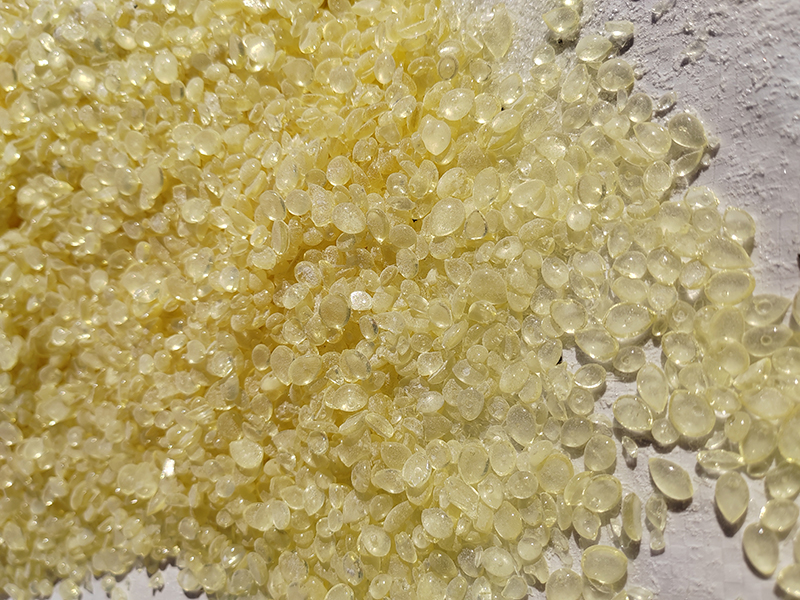
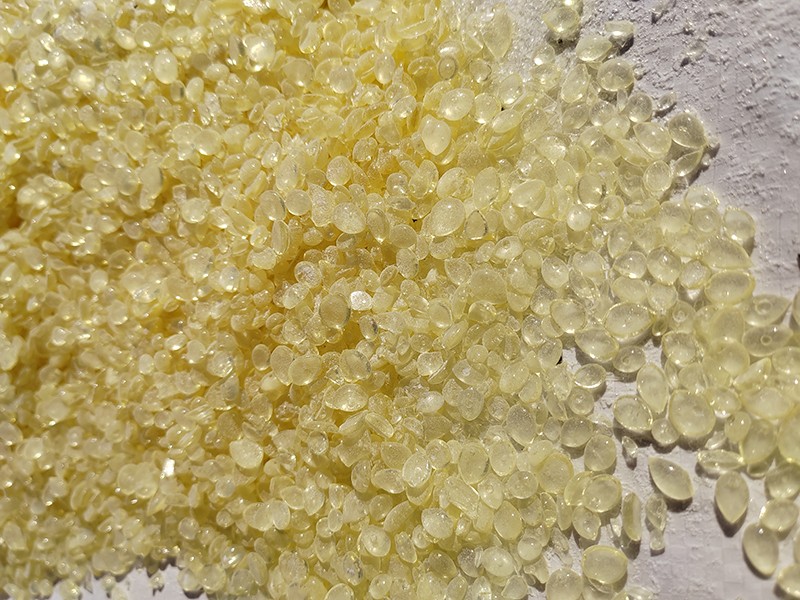
Appearance and Form: It is a low molecular weight thermoplastic aromatic petroleum resin, made from C9 fraction produced as a byproduct of ethylene plant, and the product appearance is a light yellow transparent granular solid.
Softening Point: The typical range is 100-140℃, and the specific value can be adjusted through the thermal polymerization process. High softening point models (such as 140℃) are suitable for high temperature environments. Molecular Characteristics: The molecular weight is between 300-3000, there is no polar group, it is resistant to acid, alkali and water, and it is soluble in solvents such as toluene and xylene.
Product Characteristics:
Good solubility;
Good waterproof and insulation;
Good chemical stability under acid and alkali conditions.
Performance Advantages
Adhesion: It has good compatibility with rubbers such as SBR and NR, and significantly improves the adhesion between the rubber and the substrate. Stability: The thermal stability reaches 180℃ (short-term tolerance), and it is not easy to yellow after long-term use, and is suitable for outdoor scenes.
II. Core Application Areas
Used for varnish. Self-spray paint. Alkyd resin blended paint. Printing ink. Adhesive, asphalt modification, anticorrosive paint, industrial coating
1. Adhesives and Sealants (Primary Application)
Tackification and Modification: Acts as a tackifying resin for base polymers such as SBS, SIS, and natural rubber; significantly enhances initial tack, holding power, and peel strength. Widely used in SBS all-purpose adhesives, pressure-sensitive adhesives (PSAs), hot-melt PSAs, and laminating adhesives.
Cost Reduction: When added in appropriate amounts to chloroprene adhesives, it can replace a portion of expensive resins without compromising bond strength, effectively controlling costs.
Construction Sealants: Used in tile grout, silicone sealants, and other construction sealants to improve flowability and adhesion.
2. Coatings and Paints
Replacement of Expensive Resins: Partially replaces rosin-modified resins in phenolic varnishes and epoxy paints, drastically reducing costs (to as low as one-quarter of the original cost) while enhancing the paint film's gloss, hardness, water resistance, and weatherability.
Performance Enhancement: Improves solvent release and chemical resistance; suitable for oil-based varnishes and anti-corrosion coatings.
3. Printing Inks
Binder Component: Leverages excellent solubility and compatibility to serve as an ink binder, stabilizing pigment dispersion and enhancing color development, drying speed, and print gloss.
4. Rubber Industry
Softening and Tackification: Acts as a rubber softener in systems like styrene-butadiene rubber (SBR); breaks down molecular chains to increase tack and softness, improving processability and shortening the compounding cycle.
Reinforcing Filler: Dark-colored cold-polymerized resins are sometimes used as reinforcing fillers in rubber products to reduce the amount of raw rubber required.
5. Modified Asphalt and Road Materials
Deformation Resistance: When added to asphalt, it improves high-temperature rutting resistance and elastic recovery, enhancing the pavement's resistance to crushing loads and overall durability; suitable for municipal roads and airport runways. Waterproofing and Corrosion Protection: Miscible with emulsified asphalt for use in waterproofing coatings, or as an anti-freeze protective layer for oilfield and railway pipelines; its low-temperature flowability prevents the coating from becoming brittle or cracking.
Key Characteristics
|
Feature Category |
Core Note |
Detailed Description |
|
Usage Restriction |
Not for Standalone Use |
Cold-polymerized C9 resin has high brittleness and strong cohesion, but poor self-adhesiveness. It must be blended with elastomers or film-forming resins to achieve the optimal performance. |
|
Core Advantage |
Process Advantage |
Compared with the thermal polymerization process, the resin produced by the cold polymerization process has a lighter color and fewer impurities, making it more suitable for light-colored coatings and adhesive fields with high requirements on color hue. |
|
Usage Precaution |
Compatibility Precaution |
It has good compatibility with phenolic resins and terpene resins, but the compatibility with polymers with excessively high polarity or extremely low polarity needs to be verified through experiments. |
 Address:Linzi District,Zibo City,Shandong Province
 E-mail:wanbang@wanbangresin.com
 WhatsApp:+8615053337101
China C5 hydrogenated petroleum resin supplier : Shangdong Wanbang New Materials Co., Ltd.
C5 hydrocarbon resin manufacturer has a wide range of applications, high quality, low price, and multiple uses.Welcome to consult.