In the production process of automobile tires,Tire special rubber tackifier resin is an indispensable key additive.Like an"adhesive",it silently improves the viscosity and processing performance of tire rubber,ensuring the molding quality and use safety of tires.However,with the increasing attention to the safety of chemical products,"What is Tire special rubber tackifier resin?"and"Is it toxic?"have become concerns for many people.This article will detail the core information of this special additive,uncover its mystery,and answer the most concerned questions about its toxicity.
I.Tire special rubber tackifier resin:The"invisible adhesive"in tire production
Tire special rubber tackifier resin is essentially a type of polymer compound with a specific chemical structure.It is mainly used to improve the self-adhesion and mutual adhesion of rubber compounds,adapting to the needs of multiple processes such as mixing,calendering,and molding in tire production.It is an important part of the tire formula besides raw rubber,reinforcing fillers,and vulcanization systems.It is not a single type of resin,but is compounded or modified from multiple resins according to the needs of different tire components.Its core function is to solve the problem of insufficient viscosity of rubber itself,enable tight bonding of various tire components,and avoid quality hazards such as delamination and misalignment during the molding process.
From the perspective of classification,there are mainly three types of commonly used rubber tackifier resins in tire production,each undertaking different functions:First,phenolic tackifier resins,represented by p-tert-octylphenol formaldehyde resin(such as RT1101)and p-tert-butylphenol formaldehyde resin,are the most widely used type.They can not only significantly improve the viscosity of the rubber compound,but also form a three-dimensional network structure with methylene donors,enhance the hardness and wear resistance of tire components,and adapt to the needs of key parts such as tread and apex.Second,hydrocarbon tackifier resins,including C5,C9 resins and their hydrogenated modified products,as well as coumarone-indene resins.This type of resin has excellent compatibility with natural rubber and synthetic rubber,can improve the processing fluidity of the rubber compound,reduce the mixing difficulty,and is often used in tire sidewalls,cord layers and other parts.Third,special tackifier resins,such as alkylphenol acetylene resin,known as"super tackifier resin",have high tackiness,long-term effectiveness and moisture-heat resistance,can maintain the viscosity of the rubber compound under harsh conditions such as high temperature and high humidity,and are mainly used in high-end products such as high-grade radial tires.
In tire production,the role of tackifier resin runs through the whole process:In the mixing stage,it can quickly wet inorganic fillers,accelerate the uniform dispersion of materials,and avoid the rubber compound from hardening and caking quickly;In the molding stage,it can improve the viscosity of the unvulcanized rubber compound,make the tread,cord,sidewall and other components fit firmly,and prevent detachment,bubbles and other problems during handling or initial vulcanization;In the vulcanization stage,high-quality tackifier resin will not affect the vulcanization characteristics of the rubber compound,but also help improve the physical properties of the vulcanized rubber,making the tire more wear-resistant and durable.It can be said that without rubber tackifier resin,it is difficult to produce tires with stable structure and reliable performance,especially high-performance green tires and ultra-high-performance tires,which are more dependent on tackifier resin.
II.Core Question:Is Tire special rubber tackifier resin Toxic?
Regarding the toxicity of Tire special rubber tackifier resin,the core conclusion is clear:Tire special rubber tackifier resin that meets national standards is non-toxic itself,and will not cause harm to human health and the environment during normal production and use.However,it should be noted that different types,different quality grades of tackifier resins,as well as operational specifications during use,will directly affect their safety,which can be explained in detail from the following aspects.
(I)The resin itself:Non-toxic and environmentally friendly,in line with industry standards
At present,the rubber tackifier resins used in China's tire industry all comply with national chemical product safety standards and tire industry environmental protection requirements,have passed strict toxicity tests,and are non-toxic or low-toxic products.From the perspective of chemical nature,the core component of such resins is high molecular polymers,which have large molecular weight and strong stability,and will not easily decompose toxic substances.For example,the commonly used p-tert-octylphenol formaldehyde resin has no odor and no toxicity after testing,can be dissolved in organic solvents such as benzene and toluene,but not in water.Its ash content,heating loss and other indicators are controlled at very low ranges(ash content≤0.5%,heating loss≤0.5%),which meets environmental protection requirements;Hydrocarbon resins such as coumarone-indene resin are refined from petroleum cracking fractions,and do not contain toxic components themselves.They are flammable but non-toxic,and will not cause direct harm to the human body.
It is worth noting that with the continuous improvement of environmental protection requirements,environmentally friendly tackifier resins with low free phenol and low volatility have been generally promoted in the industry.Traditional phenolic resins may contain trace free phenol(≤1.0%),while high-end environmental protection grades can reduce the free phenol content to below 0.5%,further reducing potential risks and ensuring the safety of the resin itself.In addition,hydrogenated modified hydrocarbon resins(such as hydrogenated C9 resin)not only have lighter color and better stability,but also completely eliminate volatile harmful substances,making them the preferred additives for green tire production.
(II)Potential risks:Derived from improper operation or inferior products
Although qualified tackifier resin itself is non-toxic,improper operation or use of inferior products during production,storage and use may lead to certain safety hazards,mainly reflected in two aspects:
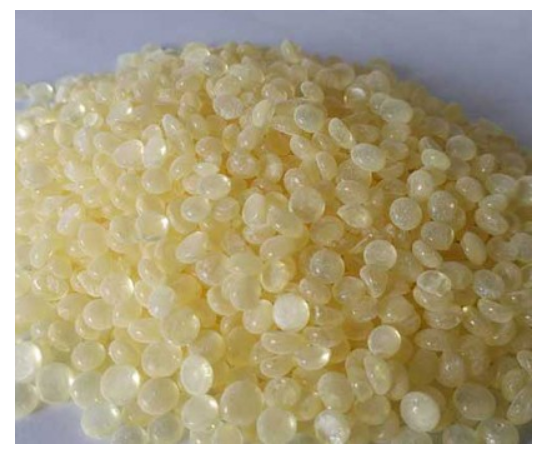
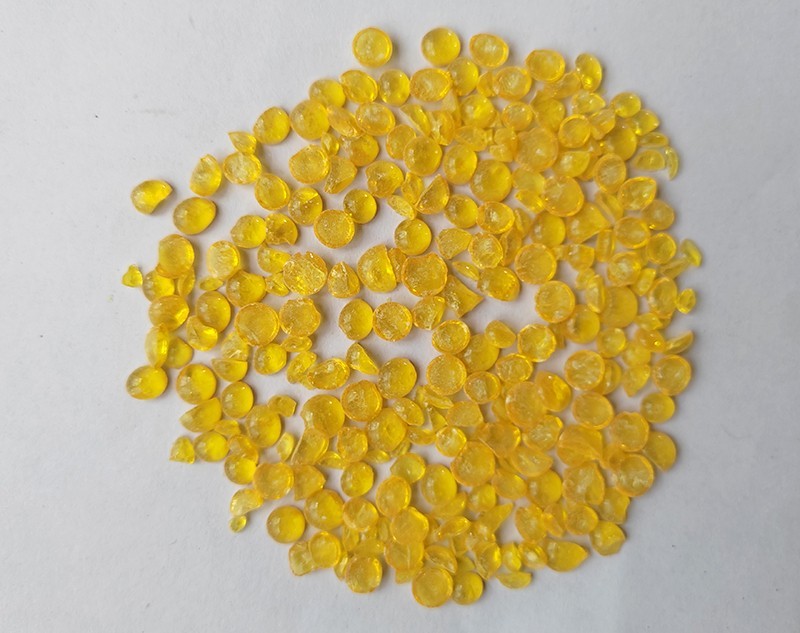
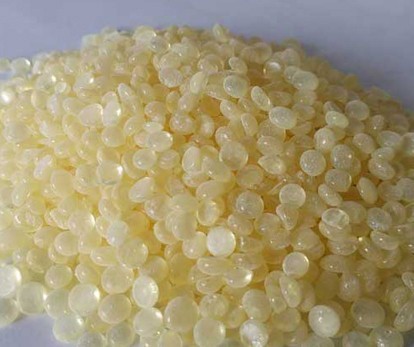
First,the risk of dust inhalation.Tire special rubber tackifier resin is mostly light yellow or brown granular.A small amount of dust may be generated during mixing and handling.If operating in a poorly ventilated environment for a long time and inhaling a large amount of dust,it may irritate the respiratory tract and cause symptoms such as cough and sore throat.However,this is not due to the toxicity of the resin itself,but the physical stimulation of the respiratory tract by dust,similar to the harm of ordinary dust.
Second,the hidden danger of inferior products.In order to reduce costs,some small manufacturers may produce tackifier resins that do not meet national standards,with excessive free phenol,added toxic solvents or impurities.The content of free phenol in such inferior products is too high,and long-term contact may irritate the human skin and respiratory tract,and even pose potential health risks;At the same time,the volatile harmful substances in inferior resins may also pollute the environment.
(III)Usage scenarios:Safe throughout the process,no secondary hazards
From tire production to daily use,the safety of tackifier resin can be fully guaranteed.In the production link,regular tire enterprises are equipped with complete ventilation facilities and protective equipment.Operators wear masks,gloves,goggles,etc.,which can effectively avoid dust inhalation and skin contact;At the same time,during the production process,the resin is fully mixed with rubber,fillers,etc.,and after high-temperature vulcanization,a stable polymer structure is formed,which will not release any harmful substances.
In daily use,the tackifier resin in the tire has long been integrated with the rubber to form a stable rubber product,which will not decompose or volatilize toxic substances,nor cause harm to the human body and the environment.Even if the tire ages and wears,the tackifier resin will fall off together with the rubber debris,and will not produce toxic pollutants.Its environmental protection and safety have been verified by long-term practice.
III.Treat rationally and use at ease
Tire special rubber tackifier resin is an indispensable"invisible adhesive"in tire production.By improving rubber viscosity and processing performance,it ensures the quality and safety of tires and promotes the development of high-performance and green tires.Regarding its toxicity,there is no need to worry too much-qualified tackifier resin that meets national standards is non-toxic itself.As long as the operation is standardized,protective measures are taken in the production process,and inferior products are not used,potential risks can be completely avoided.
With the continuous progress of chemical technology,Tire special rubber tackifier resin is developing in a more environmentally friendly,safer and more efficient direction.Products with low free phenol,low volatility and high performance have become the mainstream of the industry.As ordinary consumers,we only need to choose regular brand,qualified and compliant tire products to use at ease,without worrying about the health hazards caused by tackifier resin.After all,this silently dedicated chemical additive is one of the important forces to ensure our travel safety.

 Language


 Address:Linzi District,Zibo City,Shandong Province
 E-mail:wanbang@wanbangresin.com
 WhatsApp:+8615053337101